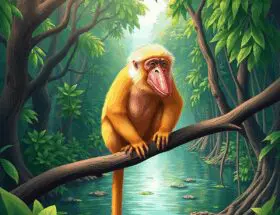

Are you ready to uncover the mysteries of one of nature’s most fascinating creatures? Look no further than the enigmatic okapi. These elusive animals, also known as “forest giraffes,” possess a wealth of unique qualities that make them a marvel of the animal kingdom. In this post, we’ll explore some of the most interesting facts about okapis, from their behavior and habitat to their physical characteristics and conservation status. So, sit back and get ready to discover the wonders of these hidden marvels of nature.
Key Takeaways:
- Okapis, also known as “forest giraffes,” are a unique and fascinating species.
- They possess a range of distinct qualities, from their behavior and habitat to their physical characteristics and conservation status.
- By learning more about okapis, we can better appreciate the importance of protecting these remarkable creatures.
Okapi Behavior
Okapis possess unique behavior patterns that make them some of the most fascinating creatures in the animal kingdom. Their behavior is both intriguing and intricate, and this section gives an in-depth view of their behavioral characteristics.
Solitary Creatures
Okapis are solitary creatures who prefer to live alone. They maintain a personal space of about two square miles and rarely interact with one another outside of mating season. This behavior is believed to be an adaptation to survive in dense forests where food resources are scarce. Being territorial helps them avoid competition and conflict while providing the space they need to move around freely.
Territorial Instincts
Okapis mark their territory by rubbing their necks against trees and rubbing their scent glands on nearby foliage. They also leave their droppings in specific areas to communicate their presence and warn others to stay away. Males, in particular, are highly territorial and will fight off any male who encroaches on their turf.
Mating Behavior
Okapis have a unique mating ritual where the male circles the female before copulation. After mating, the male leaves and has no further involvement in raising the offspring. Females, on the other hand, are responsible for raising their calves, which means they must be fiercely protective of their young.
It is also worth noting that the gestation period for okapis lasts approximately 15 months, which is one of the longest of any mammal.
Communication
Okapis communicate with one another through a variety of vocalizations, including bleats, grunts, and bellows. They also use their sense of smell to communicate by leaving their scent on foliage and trees.
“Okapis are unique creatures that possess an intricate behavioral pattern that helps them survive in their natural habitat.”
Overall, the behavior of okapis is a testament to the adaptability of nature. These elusive creatures have evolved in a way that allows them to live in a densely forested environment where food resources are limited and competition for space is high. Their behavior is just another reminder of the incredible diversity of the animal kingdom.
Okapi Habitat
The okapi is a secretive forest-dwelling herbivore native to the thick, dense rainforests of Central Africa. They are primarily found in the Democratic Republic of Congo, where they inhabit the dense rainforests of the Ituri province. These forests provide an ideal habitat for okapis due to the abundant vegetation and the shelter it provides.
The dense rainforests are characterized by a warm and humid climate with an average temperature of 25 degrees Celsius (77 degrees Fahrenheit) and an average annual rainfall of 1,500mm to 2,000mm. The forests are also home to a variety of other wildlife, including gorillas, chimpanzees, and elephants.
Okapis are notoriously elusive creatures, and their natural habitat provides them with the perfect cover to hide from predators and unwanted attention. Their stripes, which help them blend in with the dappled light of the forest canopy, also make them difficult to spot in their natural habitat.
The Characteristics of Okapi Habitat
Okapis prefer to live in areas with dense vegetation, thick undergrowth, and a canopy cover. They are also known to inhabit areas close to streams and rivers where they can access fresh water easily. The dense vegetation of the rainforest provides them with shade and shelter from the sun, which is essential for their survival.
The okapi’s habitat is also characterized by a variety of flora, including dense forest, bamboo, and liana. They are known to feed on over 100 different species of plants, including leaves, fruits, flowers, and fungi. These specialized dietary preferences have enabled them to adapt to their habitat and make the most of the resources available to them.
The Threats to Okapi Habitat
The main threat to okapi habitat is deforestation, caused by logging, agriculture, and mining. Deforestation leads to habitat loss and fragmentation, which threatens the survival of okapis and other wildlife that depend on the forest for their survival.
Other threats to okapi habitat include human encroachment, poaching, and civil unrest. The conflict in the Democratic Republic of Congo has led to an increase in the illegal trade of ivory and other wildlife products, threatening the survival of okapis and other endangered species.
Efforts are being made to protect the habitat of okapis and preserve their natural environment. Conservation organizations are working to educate local communities on the importance of preserving the rainforest, and to promote sustainable development to reduce the impact of human activities on the habitat of okapis and other wildlife.
The conservation of okapi habitat is essential for the survival of this unique and fascinating species, and for the overall health of the rainforest ecosystem.
Okapi Diet
Okapis primarily feed on foliage, including leaves, fruits, and buds. They are selective feeders and prefer certain species of trees, such as those in the family of Euphorbiaceae.
Did you know? Okapis are unique among herbivores in their ability to consume leaves and buds containing high levels of toxins. They have a multi-chambered stomach that allows them to break down toxic compounds and extract nutrients efficiently.
Okapis have a specialized feeding behavior known as “tongue-stripping.” They use their long tongues to grasp and strip leaves from branches, with their flexible lips helping them to pluck fruits and buds from trees.
In their natural habitat, okapis have access to a variety of vegetation throughout the year. During the wet season, they consume young leaves and fruit, while in the dry season, they rely on bark and mature leaves.
| Preferred Foods | Seasonality |
|---|---|
| Euphorbiaceae trees | Year-round |
| Albizia trees | Wet season |
| Terminalia trees | Dry season |
Overall, the okapi’s diet is crucial to its survival in the dense rainforests of Central Africa. Their unique feeding behavior and specialized digestive system help them thrive in their habitat, contributing to their status as a hidden marvel of nature.
Okapi Physical Characteristics
Okapis are unique creatures with a distinctive appearance that sets them apart from other animals. Some of their physical characteristics are:
| Physical Feature | Description |
|---|---|
| Zebra-like stripes | Okapis have horizontal stripes on their legs, which resemble those of a zebra. This pattern helps them blend in with the dappled sunlight that filters through the forest canopy. |
| Long neck | Their elongated necks enable them to reach leaves and buds high in the trees. |
| Long, prehensile tongue | Okapis have a tongue that can extend up to 18 inches in length, which allows them to lick the undersides of leaves and branches. |
| Large, round ears | Their ears can rotate independently, allowing them to detect sounds from different directions and avoid predators. |
| Small, deer-like body | Despite having a long neck, their bodies are small and deer-like, with a sleek and slender appearance. |
| Velvety fur | Their fur is short and smooth, but it has a velvet-like texture that protects them from the thorny vegetation in their habitat. |
| Short, stubby horns on males | Males have stumpy, horn-like ossicones on their heads, which they use for fighting during the mating season. |
These unique physical characteristics make okapis one of the most intriguing animals in the world. The next time you see one, take a moment to appreciate the rare and special qualities that make them nature’s hidden marvel.
Okapi Conservation Status
The okapi, also known as the “forest giraffe,” is an endangered species that can only be found in the dense rainforests of Central Africa. According to the International Union for Conservation of Nature (IUCN), as of 2021, the okapi’s conservation status is “Endangered,” which means the species is facing a high risk of extinction in the wild.
The main threats to the okapi’s survival are habitat loss and hunting. The increasing human population in the region has resulted in the destruction of their natural habitat, leaving them vulnerable. Additionally, poaching for their meat and skin, as well as illegal mining and logging, further endanger their existence.
“The okapi is an important symbol of the Congo rainforest and conservation in Africa. It is crucial that we work together to protect these magnificent creatures and their habitat.”
Efforts are being made to protect the okapi and ensure their survival. Conservation organizations are working with local communities to promote sustainable land use practices and protect the remaining habitats. Furthermore, strict laws and regulations have been put in place to prohibit hunting and illegal exploitation of their natural resources.
Through these conservation efforts, the okapi population has shown signs of recovery. However, sustained efforts are required to protect the species from extinction.
In conclusion, the okapi’s conservation status is endangered, and immediate action is needed to protect these magnificent creatures and their habitat. We must continue to support conservation efforts and work together to ensure the survival of this unique and fascinating species.
Okapi Reproduction
Okapi reproduction is a unique and fascinating process that involves intricate rituals and a relatively long gestation period. These elusive creatures are solitary animals, and males and females only come together during the mating season.
During this time, male okapis will search for a partner by following scent trails left by females. When a male finds a female, he will engage in a courtship ritual that involves nose-to-nose contact and circling around each other.
If the female is receptive, she will allow the male to mount her. The gestation period of an okapi is approximately 15 months, which is one of the longest of any mammal.
Once the calf is born, the mother will keep it hidden in a secluded area for the first few weeks of its life. The calf will nurse for the first six months before transitioning to a diet of leaves and other vegetation.
| Reproduction Facts | |
|---|---|
| Gestation period | Approximately 15 months |
| Mating rituals | Nose-to-nose contact and circling around each other |
| Calf diet | Nurses for first 6 months, then transitions to leaves and vegetation |
As with many aspects of okapi life, little is known about their reproduction in the wild. However, zoos have been able to successfully breed okapis and contribute to their conservation efforts.
With their unique mating rituals and lengthy gestation period, okapi reproduction remains a fascinating topic to researchers and animal lovers alike.
Other Interesting Okapi Facts
Did you know that okapis have a prehensile tongue that can reach up to 18 inches? Their long tongues allow them to grasp leaves and branches with ease, making it easier for them to feed on the vegetation in their habitat.
Another interesting fact about okapis is that females are known to be more dominant than males. In fact, females will often assert their dominance over males during mating season, choosing who they will mate with and when.
“Okapis are truly fascinating creatures and are often referred to as the ‘African unicorn.’ There’s still so much to discover about them, and I’m excited to see what else we can learn about these magnificent animals in the future.”
Here are some more quick okapi facts to impress your friends:
- Okapis are the only known living relative of giraffes.
- They have a unique scent that allows them to communicate with other okapis in their territory.
- Okapis are excellent swimmers and are known to cross rivers and streams.
- They are also called “forest giraffes” due to their long necks and zebra-like stripes.
With their unique physical characteristics and elusive nature, it’s no wonder okapis continue to captivate us. These incredible creatures are a true marvel of nature and deserve our utmost protection and conservation efforts.
Conclusion
As we come to the end of our journey into the world of okapis, it’s clear that these creatures are truly unique and deserving of admiration. Their solitary and elusive nature, combined with their physical characteristics and specialized diet, make them one of the most fascinating creatures on the planet.
However, their conservation status is a cause for concern. As an endangered species, it’s important that we take the necessary steps to protect them and ensure their survival. From conservation efforts in the wild to raising awareness about their plight, every little bit helps.
So, the next time you come across an okapi fact or see one in a nature documentary, take a moment to appreciate the wonders of nature’s hidden marvel. And let’s continue to do our part in preserving this majestic species for future generations.
FAQ
What are some interesting facts about okapis?
Okapis are often referred to as “nature’s hidden marvel” due to their elusive nature and unique qualities. They are the only living relative of giraffes and have a striking appearance with zebra-like stripes on their hindquarters. Okapis also possess long tongues that help them reach leaves and buds from tree branches.
What is the behavior of okapis like?
Okapis are generally solitary animals and prefer to live and travel alone. They are also territorial and mark their territory using scent glands on their feet. However, they do have social interactions with other okapis during mating season and can communicate through vocalizations and body language.
Where do okapis live?
Okapis are native to the dense rainforests of Central Africa. They can be found in countries such as the Democratic Republic of Congo, where they inhabit the understory layer of the forests. The specific characteristics of their habitat, including the thick vegetation and abundant food sources, contribute to their survival.
What do okapis eat?
Okapis have a specialized diet that consists mainly of vegetation. They primarily feed on leaves, buds, fruits, and fungi found in their rainforest habitat. Their unique digestive system allows them to process the fibrous plant material efficiently.
What are the physical characteristics of okapis?
Okapis have a distinct appearance with their striped hindquarters resembling a zebra. They have reddish-brown fur, which helps them blend into their forest surroundings. Okapis also have long necks, large ears, and long tongues that can reach up to 18 inches.
Are okapis an endangered species?
Yes, okapis are classified as an endangered species. They face several conservation challenges, including habitat loss due to deforestation and poaching for their meat and skin. Efforts are being made to protect okapis and their habitats through various conservation initiatives.
How do okapis reproduce?
Okapi reproduction involves unique mating rituals. Males will engage in a behavior called “necking,” where they rub their necks against each other to establish dominance. The gestation period for okapis is around 14 to 16 months, and usually, only one calf is born at a time.
What are some other interesting facts about okapis?
In addition to their striped appearance and long tongues, okapis have scent glands on their feet that they use to mark their territory. They are also known for their ability to move silently through the forest, thanks to their soft padded hooves.
- About the Author
- Latest Posts
- How I Test and Recommend

Juliet is the creator of Living Wild & Green, where she researches and writes about eco-friendly living, sustainable fashion, and non-toxic home upgrades. Since 2020, she’s been curating science-backed, stylish sustainability tips and personally testing products to help thousands of readers cut through greenwashing and live greener with confidence.