
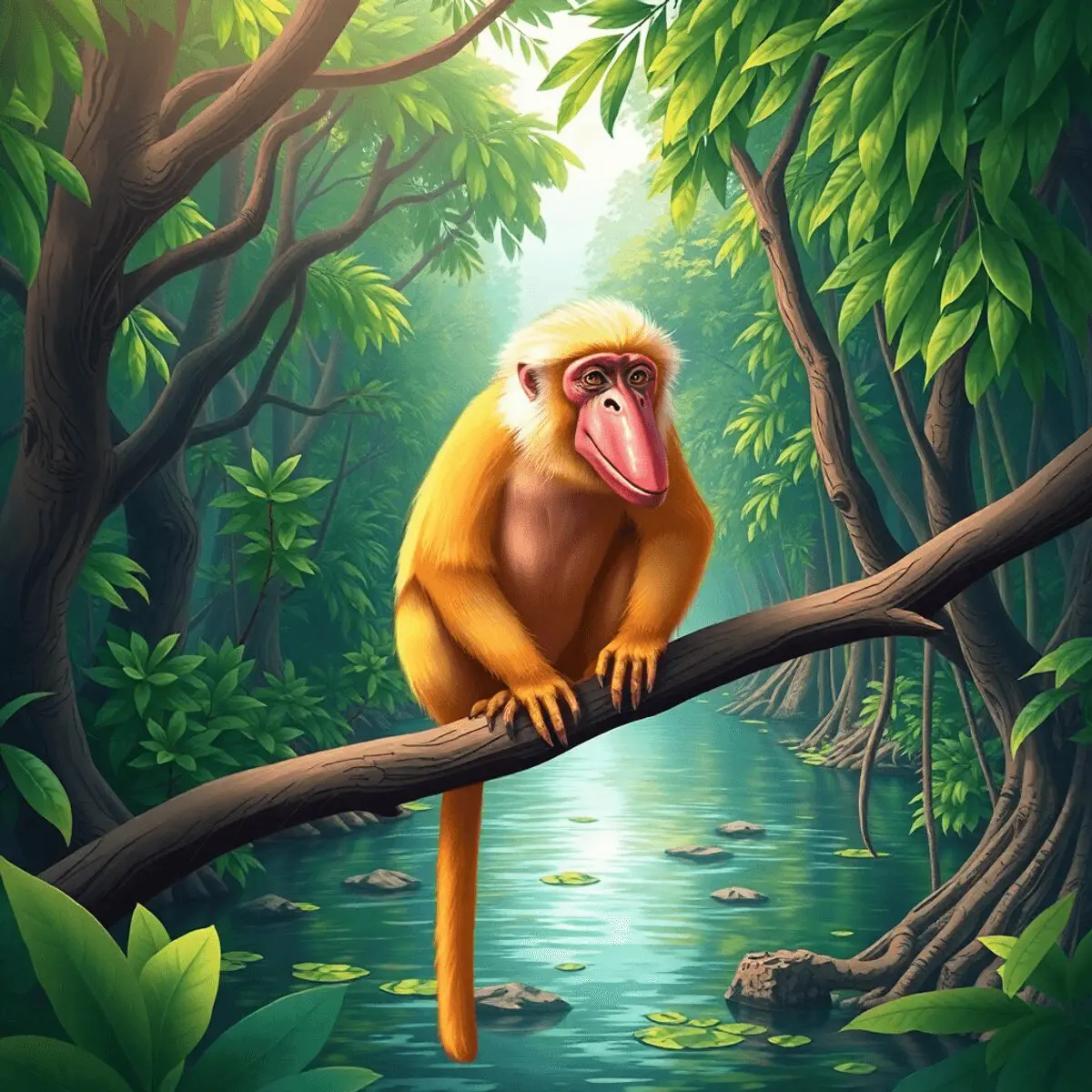
The proboscis monkey (Nasalis larvatus) is one of the most unique primates in the world. Its most distinguishing feature is its long, droopy nose, which is especially prominent in adult males. This monkey, known for its large nose, is not only recognized for its unusual appearance but also for its playful personality. In Borneo, locals often call it the “Dutch monkey” because early European explorers exaggeratedly depicted its features.
Habitat and Importance
Proboscis monkeys are found only in the lush mangrove forests and riverbanks of Borneo. They play a crucial role in their ecosystem by dispersing seeds and maintaining the health of tropical forests along the island’s waterways. These monkeys are not just important for the environment; they also hold cultural significance for many communities in Borneo, representing both natural beauty and local heritage.
This article presents 20 interesting facts about proboscis monkeys, combining intriguing scientific information with lesser-known trivia. Whether you’re curious about their large noses or entertained by their playful behavior, each fact highlights why Nasalis larvatus is an extraordinary primate that deserves our knowledge and protection.
1. Physical Characteristics of the Proboscis Monkey
Understanding the proboscis monkey size and weight reveals just how striking these primates appear in Borneo’s forests. Adults typically measure between 50 to 76.1 cm (about 20 to 30 inches) in body length, with males reaching the upper end of this spectrum. Weight ranges from 16 to 30 kg (35 to 66 lbs), making them among the heavier Old World monkeys in their habitat.
A defining trait is sexual dimorphism—where males and females show significant physical differences. The most dramatic example is the nose. Male proboscis monkeys display a bulbous, pendulous nose that can grow up to 10 cm (4 inches) long, serving as both a visual signal and an acoustic resonator for their vocalizations. Female noses remain much smaller, offering a clear distinction between the sexes. This pronounced feature in males is closely linked to social dominance, mate attraction, and producing louder calls within dense forests.
Coloration provides another vivid identifier. Infants are born with dark fur, which gradually transforms as they mature. Adults showcase a unique reddish-brown color, accented by shades of grey on their limbs and tails, subtle blue hues around the face, and occasional orange tinges on the shoulders and back. This evolving palette not only marks age but also offers camouflage among mangrove foliage.
Distinctive features—in size, nose shape, and color—set the proboscis monkey apart from any other primate in Asia’s rainforests.
2. Habitat and Geographic Distribution
The proboscis monkey habitat is strikingly specific, with these monkeys found only in the lowland rainforests of Borneo. They prefer mangrove forests and dense riverine environments, thriving in areas where freshwater is abundant and the tree canopy is thick. This dependence on water-rich ecosystems shapes almost every aspect of their daily life.
Preferred Habitats
Proboscis monkeys have specific habitats that they prefer:
- Mangrove forests: These tidal zones, where land meets the sea or river, provide a complex network of roots and branches. Proboscis monkeys use these intricate habitats for both feeding and sleeping, taking advantage of the dense cover to evade predators.
- Riverbanks and swampy lowlands: You’ll often spot them along meandering rivers. These waterways serve as travel routes and sources of food, while also offering escape routes from threats.
Arboreal Lifestyle
As an arboreal species, proboscis monkeys spend most of their time high in the trees. The canopy offers safety from ground-based predators and access to leaves, unripe fruit, and seeds central to their diet.
Geographic Isolation
Borneo’s geographic isolation gives this species a unique status. The proboscis monkey does not exist naturally outside this island—the largest in Asia and third-largest globally—which makes its survival directly tied to the health of Borneo’s wetlands and forests. Deforestation or disruption here doesn’t just affect individual groups; it threatens the future of an entire species found nowhere else on Earth.
3. Diet and Digestive Adaptations
Proboscis monkeys display a fascinating array of dietary habits that set them apart from other primates. Their diet is omnivorous, with a strong preference for plant material. You’ll often see them feasting on:
- Leaves: The bulk of their intake, especially young, tender leaves.
- Unripe fruit: Favored over ripe fruit due to easier digestion.
- Seeds and pods: Consumed when available in the forest canopy.
- Insects: Eaten opportunistically, providing additional protein.
One of the most remarkable 20 fun facts about proboscis monkeys is their complex digestive system. Unlike ruminants such as cows, proboscis monkeys possess a nine-chambered stomach. This specialized organ houses unique bacteria that ferment and break down tough plant fibers. These adaptations allow the monkey to extract maximum nutrients from fibrous leaves and seeds while avoiding toxins found in some rainforest plants.
Eating ripe fruit poses a serious risk for this species. The sugars in ripe fruit ferment rapidly in their stomach, leading to painful bloating and even death if consumed in excess.
This highly selective approach to food keeps them healthy but also means they rely heavily on unspoiled forests with diverse plant life. Their entire digestive process highlights the deep evolutionary bond between the proboscis monkey and its Bornean habitat, shaping both daily routines and long-term survival strategies.
4. Behavior and Social Structure
Proboscis monkeys are distinctly diurnal, meaning they are most active during daylight hours. Their day typically starts with foraging in the early morning, followed by periods of rest, grooming, and social interaction throughout the afternoon. As dusk approaches, they return to their sleeping sites, often high above ground on sturdy branches overhanging water.
Social Group Dynamics
The social structure of proboscis monkeys is fascinating and complex. Here are the main types of groups they form:
- Harem Groups: The most common structure involves a dominant adult male leading a group of several females and their young. These harems usually contain around 10–20 members.
- All-Male Groups: Bachelor groups also exist, comprising younger or less dominant males excluded from harems.
- Solitary Males: Older or displaced males may spend time alone until they challenge for harem leadership.
Communication and Vocalizations
Vocalizations play a critical role in maintaining group cohesion and safety among proboscis monkeys:
- Honks: Males produce deep honking calls to warn off rivals, attract females, or coordinate group movement. Larger noses amplify these sounds, making them carry farther through dense forest.
- Alarm Calls: Short, sharp barks signal immediate threats such as predators or disturbances. These calls prompt rapid group responses—either escaping into the treetops or leaping into water if necessary.
- Social Interactions: Grunts and softer vocal cues facilitate grooming sessions and help reinforce social bonds within the group.
Vocal communication among proboscis monkeys is not just about warning or dominance—it’s an essential component of their daily social life. This strong focus on vocal signals sets them apart from many other Old World monkeys that rely more heavily on visual cues.
5. Swimming Ability and Mobility
Proboscis monkeys are unique among tree-dwelling species due to their exceptional swimming skills. Unlike most monkeys, these primates regularly dive into rivers—not just for fun, but as a crucial survival skill. You’ll often spot them crossing wide rivers or jumping from high branches directly into the water below, a rare sight among Old World monkeys.
Key adaptations supporting their aquatic lifestyle include:
- Webbed toes and fingers: The partial webbing between digits gives proboscis monkeys a natural advantage in paddling quickly and efficiently.
- Streamlined bodies: Their long limbs and relatively lightweight frames allow swift movement through dense riverine vegetation and fast-flowing currents.
- Strong limb muscles: Enhanced musculature enables powerful strokes both above and below water, making them agile divers capable of escaping crocodiles or other threats lurking beneath the surface.
Proboscis monkey swimming ability is so advanced that they can cover distances of over 20 meters in a single swim. This unique adaptation sets them apart from other tree-dwelling primates, who tend to stay away from water whenever possible. For proboscis monkeys, rivers are not obstacles—they’re lifelines, offering escape routes from predators and access to new feeding areas across Borneo’s difficult landscapes.
6. Predators and Survival Strategies
Proboscis monkeys face a constant threat from a range of formidable predators within their Bornean habitat. The list of proboscis monkey predators includes:
- Clouded leopards – Agile, tree-dwelling hunters known for stalking monkeys in the dense canopy.
- Birds of prey – Large raptors target juveniles and smaller individuals, striking from above with deadly precision.
- Snakes – Pythons and other arboreal snakes silently ambush both young and adult monkeys as they move through the treetops.
- Monitor lizards – Opportunistic hunters that may target eggs, infants, or weakened adults.
- Crocodiles – Lurking beneath river surfaces, crocodiles pose a significant risk whenever proboscis monkeys swim or descend to drink.
Survival for this species depends on a blend of instinctual behaviors and clever adaptations:
Sleeping on sturdy branches that stretch over water is one of their most effective defensive strategies. When alarmed, entire groups can leap directly into the river below—using their strong swimming ability to escape land-based threats or aquatic ambushes alike.
Nocturnal vigilance also plays a role. Group members take turns being alert during the night, listening for the telltale sounds of approaching danger. These behaviors make proboscis monkeys less vulnerable than many other primates sharing their environment.
7. Conservation Status and Threats
Proboscis monkeys are officially classified as an endangered species, a status that signals their precarious future in the wild. The International Union for Conservation of Nature (IUCN) lists the proboscis monkey as endangered due to a dramatic population decline—an estimated 50% reduction over the past 35–40 years.
Key drivers behind this decline include:
- Habitat Loss: The primary threat stems from extensive logging and large-scale conversion of forests to oil palm plantations across Borneo. Destruction of mangrove swamps and riverine forests strips proboscis monkeys of essential feeding, sleeping, and breeding grounds.
- Fragmentation: Remaining forest patches become isolated, reducing genetic diversity and making groups more vulnerable to local extinction.
- Hunting Pressure: In some regions, these monkeys are hunted for bushmeat or captured for illegal trade, despite legal protections.
- Human Encroachment: Expansion of settlements and infrastructure divides habitats even further, increasing encounters with humans and exposing monkeys to additional risks.
Proboscis monkey conservation status is a direct reflection of these mounting pressures. Habitat destruction leads to reduced food sources, increased stress, and lower reproductive success. Protecting their last strongholds in Borneo’s wetlands remains critical as conservationists work to halt the downward spiral of proboscis monkey population decline.
8. Unique Interesting Facts About Proboscis Monkeys
Exploring proboscis monkey facts reveals a species full of surprises and evolutionary quirks. Each detail adds to their reputation as one of Borneo’s most distinctive primates.
1. Monotypic Marvel
Only one species exists in the genus Nasalis—the Nasalis larvatus, making the proboscis monkey a true original among primates. This singular status emphasizes their rarity and genetic uniqueness, setting them apart from other Old World monkeys.
2. Surprising Speed
Despite their awkward appearance, proboscis monkeys are surprisingly swift on land. They can reach top running speeds of 24.1 km/h (15 mph) when threatened or moving between trees. This agility is rarely seen in other large, arboreal primates.
3. Aquatic Adaptations
These monkeys are exceptional swimmers, with partially webbed feet that help them cross wide rivers. Unlike most tree-dwelling monkeys, they routinely leap into water to escape predators or move between fragmented habitats.
4. Colorful Characteristics
Male proboscis monkeys not only sport large noses but also display a bright red penis with a perpetual erection—a trait unique among primates and thought to play a role in social signaling.
5. Vocal Variety
The enlarged male nose amplifies vocalizations such as honks and bellows, serving both as communication within groups and as a way to assert dominance or attract mates.
The list of unique facts about proboscis monkeys illustrates just how specialized and unusual these animals are within the primate world. Their physical attributes, behaviors, and evolutionary history continually intrigue scientists and wildlife enthusiasts alike.
Conclusion
The proboscis monkey is a unique species that can only be found in the forests of Borneo. It is important to protect this species through conservation efforts, as it is at risk of extinction due to habitat loss and hunting. By learning interesting facts about proboscis monkeys, we can better understand the fragile balance of tropical ecosystems and the urgent need to protect them.
- Supporting wildlife protection initiatives helps ensure these remarkable primates, with their striking noses and fascinating behaviors, remain part of our world.
- Sharing 20 fun facts about proboscis monkeys can spark curiosity and inspire action to preserve biodiversity for future generations.
- About the Author
- Latest Posts
- How I Test and Recommend

Juliet is the creator of Living Wild & Green, where she researches and writes about eco-friendly living, sustainable fashion, and non-toxic home upgrades. Since 2020, she’s been curating science-backed, stylish sustainability tips and personally testing products to help thousands of readers cut through greenwashing and live greener with confidence.


