

Ever thought about turning kitchen scraps into garden gold? Home composting is easy and great for your garden and the planet. I’ll show you how to compost at home, making your living space greener.
Composting at home is amazing for your garden and the Earth. It can cut down landfill waste by up to 30%1. Since only 27% of Americans compost, starting your own pile is a smart choice.
Home composting does more than just reduce waste. It makes soil better and can help plants grow up to 50% more. You’ll also save money on fertilizers and make your own soil amendment.
Ready to get your hands dirty? This guide will teach you to start composting. Whether you have a big backyard or a small apartment, there’s a way to compost that fits you.
Home Composting Guide: Key Takeaways
- Composting reduces landfill waste and improves soil health
- Home composting can save money on fertilizers
- Composting requires a mix of ‘brown’ and ‘green’ materials
- There are options for both outdoor and indoor composting
- Regular maintenance is key to successful composting
- Composting helps combat climate change by reducing methane emissions
- Even small-scale indoor composting can be effective
Understanding the Basics of Composting
Composting turns waste into soil that’s full of nutrients. It helps recycle kitchen and yard waste, reducing the production of methane and carbon dioxide emissions. This makes your garden soil better. Microorganisms play a crucial role in the composting process by digesting materials, requiring a balance of nitrogen, carbon, water, and oxygen to thrive.
What is composting?
Composting breaks down waste with the help of tiny bugs. It needs water, air, nitrogen, and carbon-rich materials4. You can compost most food waste, coffee grounds, and leaves. Tough food scraps like broccoli stalks and corn cobs should be chopped before adding to the compost pile to help them break down more quickly.
Compost piles can get very hot. This is because of all the tiny bugs working hard4. In vermicomposting, worms eat food scraps like vegetable peels, fruit scraps, and coffee grounds, which helps in breaking down the waste efficiently.
Benefits of composting at home
Home composting has many good points:
- It cuts down on landfill waste
- It makes soil better and holds more water
- It saves money on fertilizers
- It means less need for harmful chemicals
- It helps store more carbon
- It creates good compost, which enriches soil and supports plant growth
Composting food scraps stops methane from being released. Methane is very bad for the environment5. Individuals can also donate finished compost to their local community garden.
The science behind decomposition
Decomposition turns waste into soil with the help of tiny bugs. To kill off bad germs, compost piles need to be very hot.
They should be turned several times to work well, helping to maintain an active pile. A big pile is best for the bugs to work in.
Composting Method | Time to Finished Compost | Management Level |
|---|---|---|
Hot Composting | 2-3 months | High |
Well-Managed Pile | 3 months | Moderate |
Less Intensive Management | 6 months to 1 year | Low |
Compost is ready when it’s dark brown and smells good. You can use it to mulch or make soil better. Compost is ready when there are no visible food scraps. Once the compost pile stops heating and no visible food scraps remain, the oldest compost can be removed to cure separately, ensuring that it matures properly before use.
The Impact of Composting on Climate Change
Composting plays a significant role in mitigating climate change by reducing greenhouse gas emissions and sequestering carbon in the soil. When organic materials, such as food scraps and yard trimmings, are sent to landfills, they decompose anaerobically, releasing methane, a potent greenhouse gas. In contrast, composting allows these materials to decompose aerobically, producing carbon dioxide instead of methane. This process not only reduces emissions but also creates a nutrient-rich soil amendment that can help improve soil health and structure.
By adopting home composting practices, individuals can significantly reduce their carbon footprint and contribute to a more sustainable environment. Composting food scraps and other organic materials at home prevents them from ending up in landfills, where they would otherwise contribute to methane production. Additionally, composting can help reduce the need for synthetic fertilizers, which are often produced using fossil fuels and contribute to greenhouse gas emissions.
The benefits of composting extend beyond individual households. On a larger scale, widespread adoption of composting can lead to substantial reductions in greenhouse gas emissions and promote healthier soils that sequester more carbon. By turning organic waste into valuable compost, we can play a part in combating climate change and fostering a more sustainable future.
Choosing Your Composting Method
Choosing the right composting method is key to success. I’ll show you different options for backyard and kitchen composting. This will help you pick the best one for your space and lifestyle.
Outdoor Composting Options
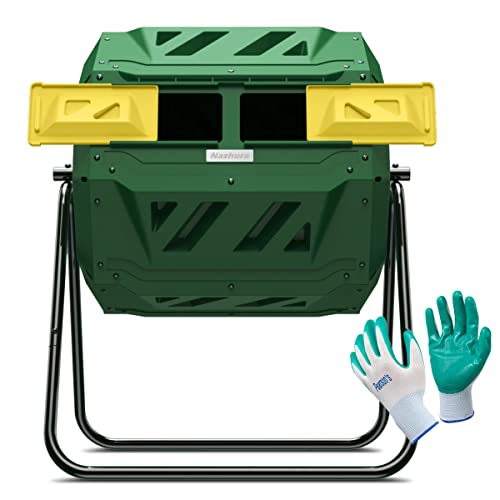
Backyard composting has many choices. Hot composting is great for fast results. It can get up to 160°F, with 140°F being best for breaking down. Start with a layer of bulky browns, such as twigs and wood chips, to help with moisture absorption and aeration. You need to mix materials carefully – use 2 to 3 times more browns than greens. Make sure your pile is at least 3 feet wide. Wood chips are important as a carbon-rich material that enhances air circulation and absorbs excess moisture. Chopping other tough food scraps like pineapple tops and broccoli stalks can help them break down more quickly.
Cold composting is good if you want less work. It takes longer, maybe a year or more. Just add yard waste and kitchen scraps to a bin as you go. Keep a mix of browns and greens.

|

|
|
|
$109.87
|
$67.99
|
$58.95
|
Indoor Composting Solutions
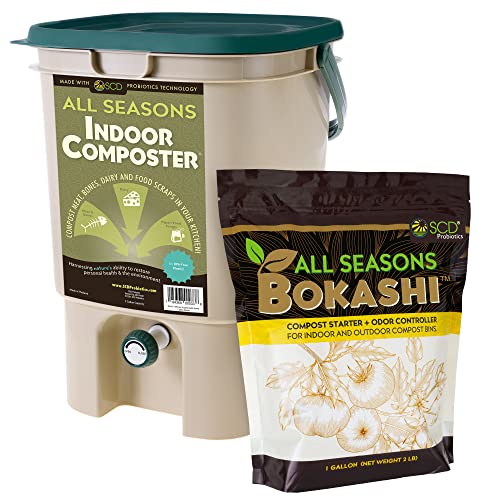
If you don’t have much outdoor space, try kitchen composting. Worm composting, or vermicomposting, is a space-efficient method for indoor composting that uses worms to break down waste, perfect for apartments. One pound of worms, approximately 1,000 worms, is needed to start a vermicomposting bin. Bokashi, a Japanese method, also works well in small areas. Worms reproduce quickly, enhancing the efficiency of the composting process.
Here are the best I have found on Amazon.
| Product Image | Product Name / Price | Primary Button |
|---|---|---|
|
|
||
|
|
||
|
|
||
|
|
||
|
|
||
|
|
||
|
|



Using Worm Composting for Small Spaces
Worm composting, also known as vermicomposting, is an excellent option for those with limited space, such as apartment dwellers or condo residents, where traditional composting may not be feasible. This method involves using worms to break down organic materials, such as fruit and vegetable scraps, coffee grounds, and tea bags, into a nutrient-rich compost.
Worm composting is a low-maintenance and odor-free process that can be done indoors, making it an ideal solution for urban environments. To start a worm composting system, you will need a worm bin, bedding material, and a starter population of worms. Red wiggler worms are the most commonly used species for vermicomposting due to their ability to thrive in a variety of environments and their voracious appetite for organic materials.
Setting up a worm bin is straightforward. Begin by selecting a suitable container with good drainage and ventilation. Add bedding material, such as shredded newspaper or coconut coir, and moisten it to create a comfortable environment for the worms. Introduce the worms to their new home and start adding fruit and vegetable scraps, coffee grounds, and other organic materials. The worms will consume these materials and produce nutrient-rich compost, which can be used to enhance soil health and support plant growth.
By using worm composting, individuals can reduce their food waste, create a valuable soil amendment, and contribute to a more sustainable future. This method not only helps manage organic waste efficiently but also provides a continuous supply of high-quality compost for your plants.
Selecting the Right Method for Your Space
Think about your space, how much waste you have, and your energy level. If you have a big yard and lots of waste, hot composting might be best. For less space or waste, vermicomposting or a small bin system could be better.
Remember, don’t add things like plastic, animal products, or pet waste to your compost. With the right method, you’ll soon have nutrient-rich compost for your garden!
Home Composting Guide: Essential Materials and Equipment
I’m excited to share the key items you’ll need to start composting at home. With the right tools, you’ll reduce waste and make nutrient-rich soil for your garden.
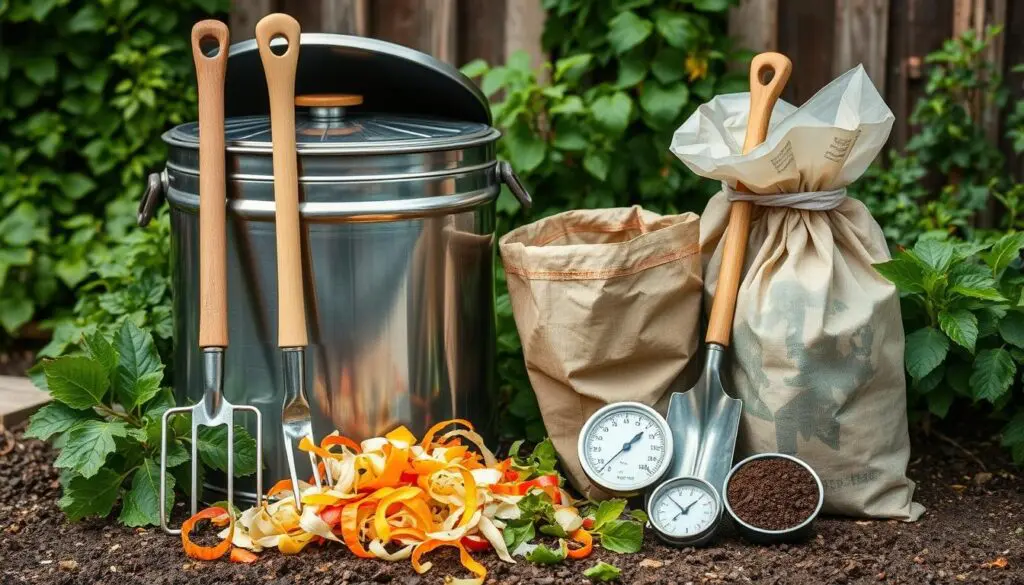
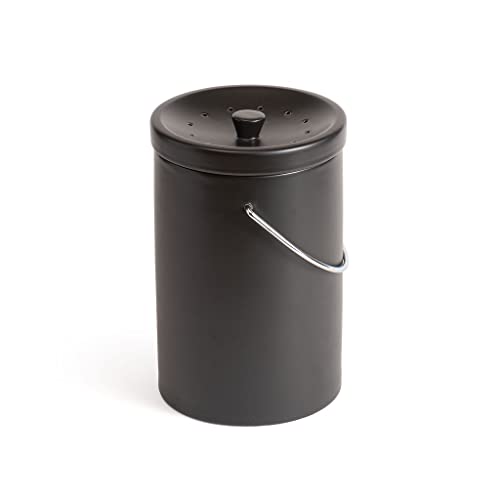
First, you need a compost bin or tumbler. These bins come in many sizes and styles. They’re perfect for both outdoor and indoor use. Counter-sized bins are great for small spaces, like kitchens.
Compost tumblers are also a good choice. They make turning compost easy, speeding up the process. Some tumblers can make compost in just four weeks. Managing extra liquids in the compost pile is crucial to ensure proper aeration and moisture levels. Starting with bulky browns helps absorb excess moisture and supports air circulation.
Here’s a list of essential composting tools you’ll need:
- Gardening gloves
- Compost starter
- Bucket for collecting scraps
- Rake for turning compost
- Garden fork for turning and mixing the compost pile
- Wheelbarrow for transporting finished compost
- Compost thermometer
- Compost sifter
Composting reduces waste and makes a valuable resource. It helps divert food scraps and garden waste. This makes up over 28 percent of household trash. It’s also a natural way to make fertilizer, avoiding harsh chemicals.
Composting Method | Equipment Needed | Best For |
|---|---|---|
Outdoor Bin | Large compost bin, rake, thermometer | Large yards, high volume of waste |
Indoor Bin | Small compost bin, compost starter | Apartments, small kitchens |
Tumbler | Compost tumbler, thermometer | Easy maintenance, faster composting |
Vermicomposting | Worm bin, red wiggler worms | Indoor composting, low maintenance |
With these tools and equipment, you’re ready to start composting. It’s an eco-friendly way to reduce waste and make organic fertilizer for your plants.
Setting Up Your Compost System
Setting up a compost system at home is a great way to reduce waste. It also makes nutrient-rich soil for your garden. Let’s dive into the key steps for a successful compost pile setup.
Selecting the Ideal Location
Choose a spot in your yard that gets some sun but isn’t fully exposed. Your compost bin needs at least three to four hours of full sun daily for optimal performance. Avoid placing it against buildings or fences to prevent pest issues and staining.
Preparing Your Composting Container
For smaller backyards, static or tumbling composting bins work well. The recommended size for a compost bin is 1 cubic yard (3’x3’x3′)11. This size allows for efficient decomposition and easy management.
Creating the Perfect Compost Mix
The key to successful composting lies in the right mix of green and brown materials. Tough food scraps like corn cobs and broccoli stalks should be chopped to facilitate faster decomposition. Consistently topping up the compost with green materials is crucial for adding greens, which helps maintain a balanced mix essential for creating good compost. A healthy compost pile should have a 2:1 ratio of brown carbon-rich material to green nitrogen-rich material. This compost mix ratio ensures proper decomposition.
Mixing other carbon-rich material with food scraps is also important to maintain the right balance of carbon and nitrogen.
Layer your compost like lasagna, alternating between brown and green materials. Start with a 5-6 inch base layer of browns. Water each layer until fully saturated. It’s important to water the compost bin at least once a week to maintain proper moisture levels.
Material Type | Examples | Proportion |
|---|---|---|
Brown (Carbon-rich) | Dry leaves, straw, paper | 2 parts |
Green (Nitrogen-rich) | Grass clippings, food scraps | 1 part |
Remember, it typically takes four to six months for the initial compost starter material to begin decomposing. For a finished product, expect to wait between eight to 12 months. Turning the compost once a month can speed up this process and ensure proper oxygenation.
Reducing Food Waste
Reducing food waste is a crucial step in the composting process, as it helps to minimize the amount of organic materials that end up in landfills and contribute to greenhouse gas emissions. By composting food scraps like fruit and vegetable scraps, you can significantly cut down on the waste sent to landfills and create a nutrient-rich soil amendment for your garden.
Implementing home composting systems is an effective way to manage organic waste and reduce the environmental impact of food waste. However, it’s important to avoid adding cooked food and dairy products to your compost pile, as these high-nitrogen materials can attract pests and disrupt the composting process.
Composting food scraps such as coffee grounds and eggshells can help create a balanced compost pile with a mix of green and brown materials. This balance is essential for the composting process, ensuring that the pile decomposes efficiently and produces high-quality compost.
Reducing food waste through composting not only helps mitigate the effects of climate change by reducing the need for synthetic fertilizers but also promotes soil health. By composting food waste, you can reduce the amount of methane produced in landfills, a potent greenhouse gas that contributes to climate change.
Maintaining Your Compost Pile
Keeping your compost pile in top shape is key to successful composting. I’ve learned that regular compost maintenance is crucial for turning kitchen scraps and yard waste into rich, nutrient-packed soil. It’s important to keep mulch a few inches away from plant stems and tree trunks to prevent issues such as nitrogen starvation and rot.
Monitoring compost temperature is a vital aspect of hot composting. This method requires close attention to the bin’s temperature to determine when to turn it. For optimal results, I aim for a temperature range of 140-160°F (60-71°C) in the pile’s center.
One of my favorite composting tips is to build circular or rectangular piles between 3 to 5 feet high. This size range promotes efficient decomposition and makes it easier to manage. I turn or aerate the pile every 1-2 weeks to circulate air and speed up the process.
Moisture management is another crucial factor. I keep the compost moisture levels around 40% to 60% to ensure proper aerobic decomposition. If the pile feels too dry, I add water. If it’s too wet, I mix in more brown materials like dry leaves or shredded paper. A compost pile that smells bad likely has too much moisture or an incorrect balance of materials.
For those with limited space, tumbler composting is a great option. It’s relatively critter and smell-free, making it perfect for small, urban spaces. With tumblers, I turn the contents every time I add new materials. Certain food scraps can attract animals and should be avoided.
Remember, patience is key in composting. Under ideal conditions, composted food and yard trimmings can decompose in about six weeks. However, the process may take longer depending on your method and materials. The reward? Rich, homemade compost that’s roughly one-third of the original volume.
Common Challenges in Composting
One of the most common challenges in composting is maintaining the right balance of green and brown materials. For instance, grass clippings and dry leaves need to be mixed in the correct proportions to ensure optimal decomposition. Too much of one type can slow down the process or create unpleasant odors.
Odors and pests can be a problem, especially if the compost pile is too wet or contains too many nitrogen-rich materials like food scraps and meat. To avoid this, ensure your compost pile has good drainage and aeration, and regularly turn the pile to keep it well-mixed and oxygenated.
Weather conditions can also impact the composting process. Excessive rain can make the pile too wet, while drought can dry it out. Adjustments, such as adding more brown materials during wet periods or watering the pile during dry spells, are necessary to maintain the right moisture levels.
Weed seeds and other unwanted materials can be introduced into the compost pile through contaminated inputs like weed-infested grass clippings or produce stickers. To prevent this, carefully inspect and clean materials before adding them to the pile.
Pests such as rodents and insects can be attracted to food scraps and other organic materials in the compost pile. To deter them, avoid adding meat, dairy products, and other high-nitrogen foods that can attract pests.
Maintaining good drainage and aeration in the compost pile is crucial to preventing the growth of anaerobic microorganisms, which can produce unpleasant odors and reduce the quality of the finished compost. Regular monitoring and maintenance are essential to ensure optimal performance and prevent common challenges from arising.
For further guidance and troubleshooting tips, consider exploring additional resources such as EPA composting webpages.
Using Compost: From Garden to Table
Finished compost is a fantastic soil amendment that can significantly improve soil structure and fertility, leading to increased crop yields and healthier plant growth. By adding compost to your garden, you can enhance the soil’s ability to retain moisture and nutrients, creating an ideal environment for plants.
Compost also helps suppress plant disease and promotes the activity of beneficial organisms like worms and other microorganisms. These organisms play a crucial role in breaking down organic matter and recycling nutrients, contributing to a thriving garden ecosystem.
Using compost as mulch can help retain moisture and regulate soil temperature, reducing the need for frequent irrigation and other inputs. This not only conserves water but also helps maintain a stable growing environment for your plants.
For container gardens and indoor plants, compost can be used to create nutrient-rich potting mixes. This provides a fertile growing medium that supports a wide range of plant species, ensuring robust growth and vibrant health.
Improving soil health with compost also promotes ecosystem services such as carbon sequestration and biodiversity conservation. By reducing the need for chemical fertilizers and pesticides, composting supports a more sustainable and environmentally friendly approach to gardening and agriculture.
Ultimately, using compost in your garden helps create a thriving and resilient ecosystem, providing numerous benefits for plants, people, and the environment. By turning organic waste into valuable compost, you contribute to a healthier planet and a more sustainable future.
Conclusion: Reaping the Rewards of Your Composting Efforts
I’ve shown you how to compost at home. Now, you get to see the benefits. The compost you made is great for your garden. It turns waste into something valuable for your garden.
Compost is amazing for your garden. It feeds your soil and plants. Your garden will grow better because of it!
Composting helps our planet too. In the US, we throw away a lot of food. Composting cuts down on this waste. It helps our planet stay healthy!
- About the Author
- Latest Posts
- How I Test and Recommend

Juliet is the creator of Living Wild & Green, where she researches and writes about eco-friendly living, sustainable fashion, and non-toxic home upgrades. Since 2020, she’s been curating science-backed, stylish sustainability tips and personally testing products to help thousands of readers cut through greenwashing and live greener with confidence.
