
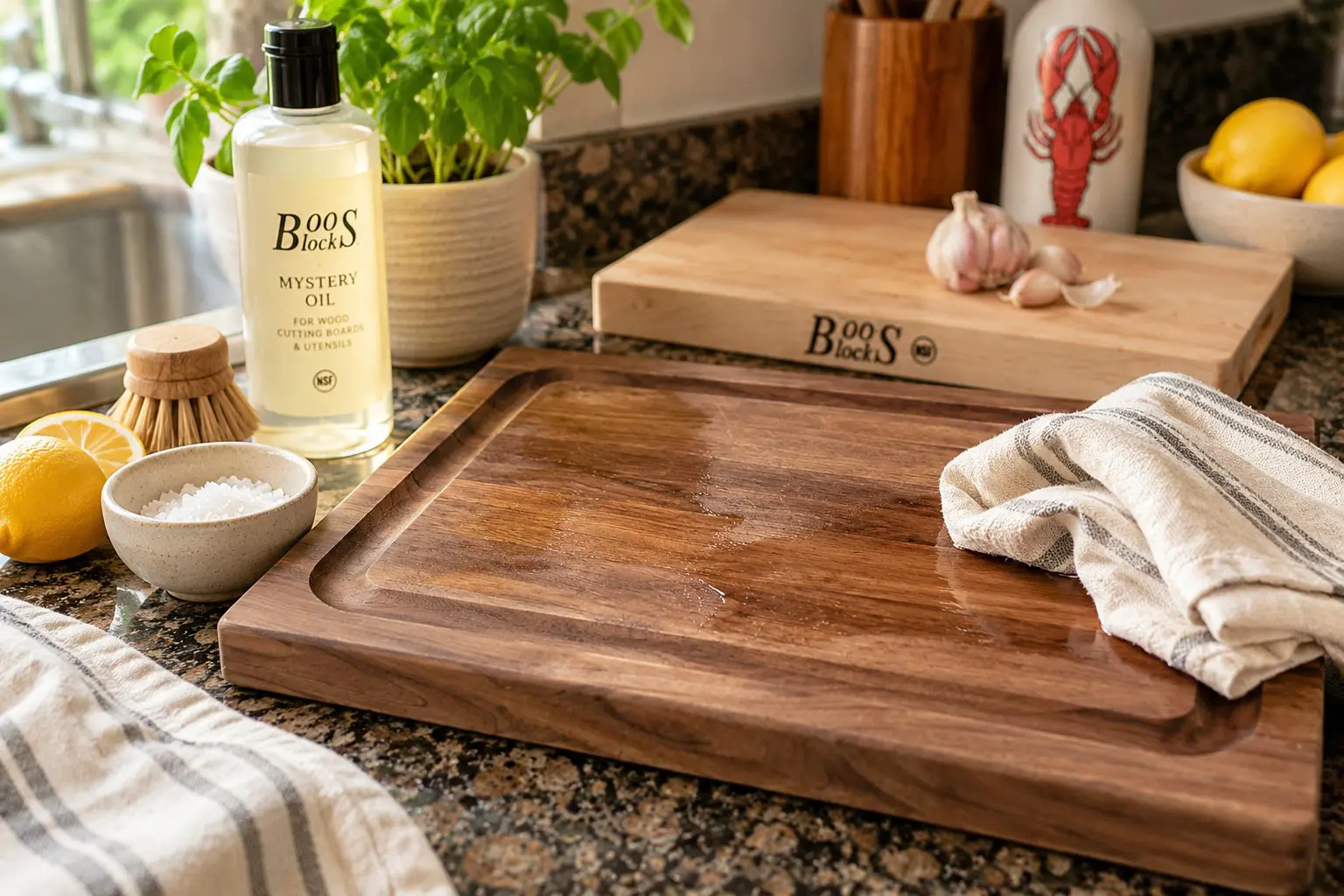
To clean a wooden cutting board, scrub it with hot water and a little dish soap, rinse, pat dry with a clean cloth, and stand it on its edge to air dry. Don’t soak it, and keep it out of the dishwasher. After cutting raw meat, sanitize it with 3% hydrogen peroxide. Then, every few weeks, rub in food grade mineral oil or a plant-based board oil so the wood doesn’t dry out and crack.
That’s the whole routine. Below, I’ll walk through each step, plus how to get rid of stains and smells, how to oil a cutting board properly, what’s different about bamboo, and how to fix a board that’s gone rough, warped, or scratched.
One important note before you start: always check your board’s care instructions from the manufacturer first. The routine below works for most wood and bamboo boards, but some brands have specific rules for their finishes, glues, and warranties. When their instructions differ from mine, follow theirs.
A quick note on how I approach this: I’m not the eco police, and the goal is better, not perfect. A wood board you take care of can replace a stack of plastic ones and last for decades. That’s a real win, even if your routine isn’t flawless. The one thing I won’t recommend is anything toxic.
This post contains affiliate links. If you make a purchase through them, I may earn a small commission at no extra cost to you.
Wood Cutting Board Care at a Glance
Here’s the full care schedule in one place. Most of it takes less than a minute.
When | What to do | Time |
|---|---|---|
After every use | Scrape, wash with hot water and dish soap, rinse, pat dry, stand on edge | 1 minute |
After raw meat | Wash, then sanitize with 3% hydrogen peroxide | 5 minutes |
When it stains or smells | Scrub with salt and half a lemon, or a baking soda paste | 5 minutes |
Every 3 to 4 weeks (every 1 to 2 weeks for a new board) | Oil with food grade mineral oil or plant-based board oil, let it sit overnight | 5 minutes plus drying |
Once or twice a year | Sand out rough spots and deep cuts, then re-oil | 20 minutes |
What You’ll Need
You probably have almost everything already:
- Dish soap and a sponge or brush
- A bench scraper or the back of a knife
- A clean cloth or towel
- 3% hydrogen peroxide for sanitizing
- White vinegar in a spray bottle for everyday cleaning
- Coarse salt, a lemon, and baking soda
- Food grade mineral oil or a plant-based board oil
- Fine sandpaper (around 220 grit) for occasional touch-ups
How to Clean a Wooden Cutting Board After Every Use
This is the daily routine, and it’s the part that matters most. It’s quick enough to do on busy weeknights.
- Scrape off food. Push scraps into the trash or compost with a bench scraper so you’re not scrubbing them into the grain.
- Wash with hot or warm water and dish soap. Scrub both sides, not just the one you cut on. The other side picks up dirt and crumbs from the counter.
- Rinse quickly. A fast rinse under the tap is all you need. Don’t let the board sit under running water or in a full sink.
- Pat dry. Wipe off the surface water with a clean cloth right away.
- Air dry on its edge. Stand the board upright, or prop it in a dish rack, so air reaches both sides.
A quick tip: keep a dish towel by the sink just for your board, so drying it right away becomes a habit. That last step is the one people skip, and it’s how boards warp. When a board dries flat on the counter, the top dries faster than the bottom, and the wood cups. Here in Miami, with our humidity, drying on edge isn’t optional. A board left damp and flat can start to smell or grow mold within days.
And yes, dish soap is fine on wood. Some people have heard that soap ruins wooden boards, but a small amount of mild soap won’t hurt the wood. What damages boards is soaking and the dishwasher, not soap.
How to Sanitize a Wood Cutting Board After Raw Meat
For bread, fruit, and vegetables, soap and hot water is enough. After cutting raw meat, poultry, or seafood, wash the board promptly with hot, soapy water and rinse it well. Meat juices and brine left sitting on wood soak in, soften the surface, and weaken the glue joints. If possible, keep a separate board for raw proteins so it never comes in contact with ready-to-eat food.
Then, if you want to sanitize, wash first. Sanitizers work on a clean surface, not a dirty one.
Hydrogen Peroxide (My Pick)
For a natural kitchen, 3% hydrogen peroxide (the brown bottle from the pharmacy) is the option I recommend. It breaks down into water and oxygen, so it doesn’t leave harsh residue on the wood. Spray or pour it over the clean board, and it will fizz as it works. Let it sit for a few minutes, wipe clean, rinse, and dry.
Diluted Bleach (the USDA Method)
You don’t need bleach to keep a wood board safe. Still, it’s worth knowing the official method. The USDA recommends 1 tablespoon of unscented liquid chlorine bleach per gallon of water: apply it, let it stand several minutes, rinse thoroughly with clean water, and air dry.
It works, but it’s a harsher chemical than most home kitchens need, and John Boos warns that harsh chemicals can discolor wood. Bleach can lighten a dark board like walnut. If you prefer the USDA route after raw poultry, dilute it exactly and rinse well.
White Vinegar for Everyday Cleaning
Vinegar is great for light cleaning and odors. Wash, then a spray of plain white vinegar across the surface, let it sit for about 5 minutes, and wipe clean. It’s gentle, cheap, and non-toxic, but it isn’t a substitute for proper sanitizing after raw poultry or meat.
One important note: use either vinegar or hydrogen peroxide, not both together. Combining them creates peracetic acid, a harsh chemical you don’t want on a food-prep surface.
If you’re wondering whether wood is less sanitary than plastic, the research says it holds up well. I cover that in my guide to the best cutting board material.
How to Remove Stains and Smells
Beets, berries, turmeric, garlic, and onion all leave their mark on wood eventually. Luckily, two pantry fixes handle almost all of it.
Salt and Lemon
Sprinkle a generous layer of coarse salt over the board. Cut a lemon in half and use one half to scrub the salt into the stain, squeezing a little lemon juice as you go. Let it sit for about five minutes, then rinse, pat dry, and stand the board on edge. The salt works as a gentle scrub, and the lemon lifts stains and cuts odors. If you have a cut on your hand, you’ll feel the lemon, so this is a good time for gloves.
Baking Soda Paste
For stubborn smells, mix baking soda with a little water into a thick paste. Spread it over the board, let it rest for 10 to 15 minutes, then scrub and rinse. Baking soda absorbs odors that lemon alone won’t fully remove.
After either method, give the board a light coat of oil once it’s completely dry. Salt and lemon can dry the surface out a bit.
How to Oil a Cutting Board
Oiling is the easiest way to maintain a wood board and extend its life. It keeps the wood from drying out, cracking, and absorbing everything you cut. It also keeps the wood’s color rich instead of pale and gray. It’s also what makes a board last for decades instead of a few years. Oiling isn’t exactly fun, but it takes about five minutes a month.
Which Oil to Use
The standard is food grade mineral oil. It’s food safe, it doesn’t go rancid, and it soaks deep into the wood. I use John Boos boards in my kitchen, and Boos makes a care set with their Mystery Oil and Board Cream. The oil soaks in, and the cream seals the surface.
Mineral oil is made from petroleum, though. If you’d rather skip that, Caron & Doucet makes a board oil from refined coconut oil. It works the same way and won’t go rancid either.
What to avoid: regular cooking oils like olive, canola, or vegetable oil. They can go rancid in the wood and leave the board sticky and smelly.
Step by Step
- Start with a clean, completely dry board. Oiling a damp board traps moisture in the wood.
- Apply an even coat of oil. Pour some on, or dip a clean cloth in the oil, and spread it with the cloth or your hands. Mineral oil is fine on skin. Cover every surface, including the edges and the underside.
- Let it soak in. Leave the board standing on edge for several hours, or ideally overnight. Oiling at night works well, since the board can rest while you sleep. If some spots look dry after an hour or two, add a little more there. You want the wood to stop absorbing, not a puddle on top.
- Wipe off the extra. The next morning, wipe away any oil that’s still sitting on the surface. Over-oiling leaves a board sticky, so more isn’t better.
- Add board cream if you have it. Rub an even layer over the surface, let it sit overnight, then wipe off the excess. The beeswax seals in the oil and helps the board repel water and food juices.
How Often to Oil a Cutting Board
How often you oil depends on the board and how much you use it. A brand-new board is thirsty, so oil it every 1 to 2 weeks for the first month or two. After that, every 3 to 4 weeks is a good rhythm with daily use. Between oilings, a simple test works: if water beads on the surface, the board is fine. If water soaks in and the wood looks pale or dry, it’s time.
Keeping up with oiling matters most if you cut meat, poultry, or fish on your board. A well-oiled board has a moisture barrier that keeps juices from soaking into the wood.
One more habit that makes a board last: spread your cutting across the whole surface instead of always chopping in the same spot. If your board is reversible, flip it now and then so both sides wear evenly.
For a DIY option, you can make your own board cream by melting beeswax into mineral oil, about one part wax to four parts oil. Store-bought works just as well if you’d rather save the time.
Bamboo Cutting Board Care
Bamboo cutting boards follow the same basic routine: wash with hot water and dish soap, pat dry, and stand on edge. There are a few differences, though.
- Soaking is even worse for bamboo. A bamboo board is strips of bamboo glued together, and standing water weakens the glue joints. That’s where bamboo boards crack and split.
- It needs less oil. Bamboo is less porous than most woods, so it absorbs oil more slowly. Oil it every month or two, or whenever it looks dry.
- Sanding is limited. You can lightly sand a rough surface, but sanding deeply can expose the glue lines. Light touch-ups only.
The same oils work on bamboo, including mineral oil and Caron & Doucet.
How to Fix Common Wood Cutting Board Problems
One of my favorite things about wood is that most problems are fixable. Plastic boards can’t be sanded back to new, but wood can.
Rough or Fuzzy Surface
After a lot of washing, the grain can rise and feel fuzzy. Lightly sand the surface with fine sandpaper, around 200 to 220 grit, always going with the grain. That’s also what John Boos recommends for minor scratches. Wipe off the dust with a damp cloth, let it dry, and oil.
Deep Knife Marks and Scratches
Deep cuts are where food and bacteria can collect. Start with a coarser sandpaper (around 120 grit) to level the surface, then finish with 180 and 220 grit so it’s smooth. Afterward, give the board a heavy oiling, since fresh wood absorbs a lot.
Warping
A board that rocks on the counter has usually dried unevenly. Small warps sometimes relax if you lay the board with the high side up on a damp towel for a few hours, then dry it on edge. Going forward, always dry on edge and oil both sides equally.
Cracks
Tiny surface cracks usually mean the board is too dry. Oil it well, and they often close up. A crack that runs deep or all the way through can’t be fixed safely, since food and bacteria get trapped inside.
Dark Spots or Mold
Surface spots can often be removed with a hydrogen peroxide soak followed by sanding. If the mold comes back after sanding, or the spots go deep into the wood, it’s time to replace the board.
What Not to Do
- Don’t put it in the dishwasher. For most wooden cutting boards, especially glued or laminated boards, hand washing is the safest choice. Dishwashers expose the wood and glue joints to prolonged heat and moisture, which can cause warping, cracking, or separation. Always follow the manufacturer’s care instructions.
- Don’t soak it. Never submerge a wooden board in water. Prolonged moisture makes the wood swell and crack, and leaving it in the sink with the dishes overnight is the fastest way to ruin a board.
- Don’t dry it flat. Always stand it on its edge.
- Don’t store it in direct sunlight or next to the stove. Heat and sun dry the wood out and fade it. Keep it somewhere dry, out of direct sun.
- Don’t use cooking oil. Olive and vegetable oils go rancid in the wood.
- Don’t use harsh cleaners. Abrasive powders, steel brushes, and strong chemicals can damage and discolor the wood.
- Don’t wash other dishes on top of it. Scrubbing pots and tools on your board scratches the surface and leaves it sitting in dirty water.
When to Replace a Wooden Cutting Board
With good care, a hardwood board can last a lifetime. Still, it’s time to replace it if it has a crack that goes all the way through, grooves so deep that sanding can’t level them, mold that comes back after sanding, or a warp so bad that it rocks no matter what you do. Plastic cutting boards are a different story: they wear out much faster, since deep grooves can’t be sanded away.
If you’re shopping for a new one, I’ve rounded up my picks in my guide to non-toxic cutting boards.
Frequently Asked Questions
How do you care for a wooden cutting board?
Wash it with hot water and dish soap after each use, pat it dry, and stand it on its edge to air dry. Oil it every 3 to 4 weeks with food grade mineral oil or a plant-based board oil. Don’t soak it, and keep it out of the dishwasher.
Can you use dish soap on a wooden cutting board?
Yes. A small amount of mild dish soap and hot water is the best way to clean a wooden cutting board. Just rinse it quickly and dry it right away.
Can wooden cutting boards go in the dishwasher?
Most shouldn’t. Glued and laminated boards, which is most wood boards sold today, can warp, crack, or split at the seams. The USDA notes that some solid hardwood boards can handle a dishwasher, but most manufacturers, including John Boos, say hand wash only. Check your board’s care instructions.
How often should you oil a cutting board?
Every 3 to 4 weeks with daily use, or whenever the wood looks pale and water soaks in instead of beading up. Oil a new board more often, every 1 to 2 weeks for the first month or two. Bamboo needs oil a little less often.
Can I use olive oil on a wooden cutting board?
It’s better not to. Olive oil and other cooking oils can go rancid in the wood and leave a sticky, sour-smelling surface. Use food grade mineral oil or a board oil made for wood.
How do you disinfect a wooden cutting board naturally?
Wash with soap and hot water, then spray with 3% hydrogen peroxide, let it sit a few minutes, rinse, and dry. White vinegar helps with odors and light cleaning, but after raw poultry, hydrogen peroxide is the better choice. Don’t combine vinegar and hydrogen peroxide.
How long does a wooden cutting board last?
A well-cared-for hardwood board can last a lifetime, since you can sand out knife marks and re-oil it. Most boards that fail early were soaked, put in the dishwasher, or never oiled.
- About the Author
- Latest Posts
- How I Test and Recommend

Juliet is the creator of Living Wild & Green, where she researches and writes about eco-friendly living, sustainable fashion, and non-toxic home upgrades. Since 2020, she’s been curating science-backed, stylish sustainability tips and personally testing products to help thousands of readers cut through greenwashing and live greener with confidence.