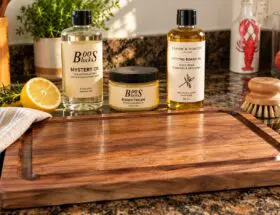
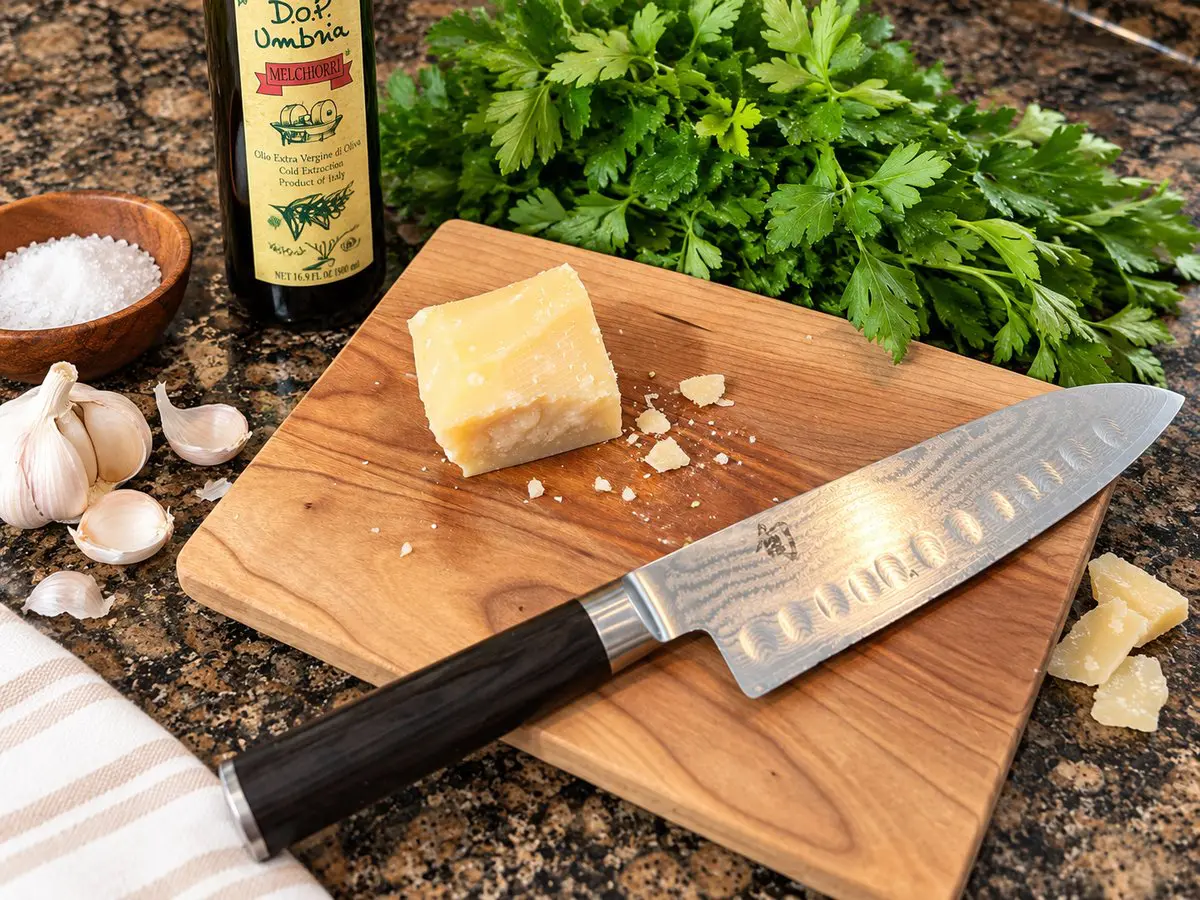
The best cutting board material for most home cooks is a closed-grain hardwood like maple, walnut, or cherry. It’s gentle on knife edges, it lasts for years with a little food-grade mineral oil or a plant-based board oil, and it doesn’t shed plastic into your food. Bamboo is a solid runner-up if you’re on a budget. Plastic is the one most of us grew up with, but it’s the hardest to recommend now that we know how much it sheds.
Below is every common cutting board material side by side: wood (and which wood), bamboo, plastic, rubber, paper composite, titanium, stainless steel, and glass. You’ll also find the two comparisons people ask about most, bamboo vs wood and wood vs plastic, plus a hardness chart for the woods worth buying.
A quick word on how I look at this: I’m not the eco police. The goal here is better, not perfect. A board that replaces plastic, cuts waste, and lasts for years earns a spot even if a purist could find a flaw with it. The one thing I won’t recommend is anything toxic.
Cutting Board Materials at a Glance
Here’s the short version before we get into each one. “Plastic-free” means the cutting surface itself isn’t plastic.
Material | On knife edges | Upkeep | Dishwasher safe | Plastic-free | Best for |
|---|---|---|---|---|---|
Hardwood (maple, walnut, cherry) | Gentle | Hand wash, oil monthly | No | Yes | Everyday food prep |
Bamboo | A bit harder on edges | Hand wash, oil occasionally | No | Yes (check the glue) | A budget everyday board |
Plastic | Gentle | Low | Usually | No | Hard to recommend |
Rubber | Gentlest | Low | Some models | No (synthetic) | Heavy knife work |
Paper composite | A bit harder on edges | Very low | Yes | Mostly (resin binder) | Raw meat, dishwasher households |
Titanium / stainless steel | Hard on edges | Very low | Yes | Yes | Thawing, dough, serving |
Glass | Hardest on edges | Very low | Yes | Yes | Serving, pastry |
Types of Cutting Boards by Material
Wood Cutting Boards
Wood cutting boards have been the standard in home kitchens and butcher shops for a long time, and for good reason. A good hardwood has a slightly softer surface than your knife, so the blade sinks in a little instead of skidding or rolling its edge. That’s why wooden boards keep knives sharp longer than almost any other material.
The wood fibers also matter for hygiene. Closed-grain hardwoods like maple, walnut, and cherry have tight pores that don’t soak up much liquid, and small knife marks tend to close back up. We’ll get into what the research says in the wood vs plastic section below.
The two woods I cook on are maple and walnut. Maple is the lighter, harder one and the classic butcher-block wood. Walnut, on the other hand, is a little softer and darker, and that dark color hides stains from beets, berries, and turmeric better than maple does.
Wood Board Upkeep
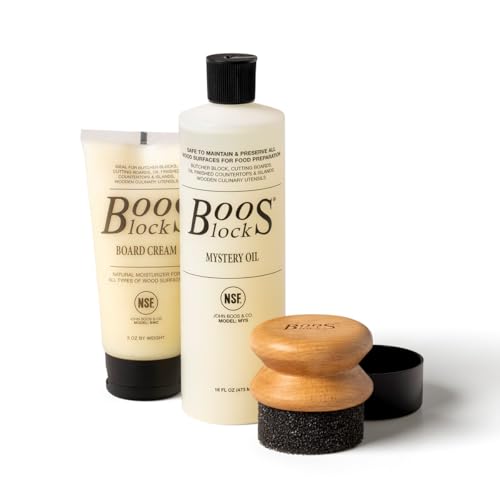
However, the trade-off with wood boards is care. They need a hand wash in hot water with a little soap, a full dry standing on edge, and regular oiling with food grade mineral oil or a plant-based board oil. Re-oil about once a month with frequent use, or whenever the board looks dry and pale. That’s about five minutes, and it keeps a board in tip top shape for years. For stains or smells, scrub with coarse salt and half a lemon, rinse, and let it dry. Wood never goes in the dishwasher: the heat and soaking can warp or crack it. For the full routine, including how to sanitize and fix a worn board, see my guide on how to clean a wooden cutting board.
Mineral oil is food safe, but it’s made from petroleum. If you’d rather skip that, Caron & Doucet makes a cutting board oil from 100% refined coconut oil. It soaks in like mineral oil, has no coconut taste or smell, and won’t go rancid the way olive or canola oil can. It works on bamboo boards too.
|

|
Bamboo Cutting Boards
Bamboo is technically a grass, not a wood. Bamboo cutting boards are made by slicing the stalks into strips and gluing them together under pressure. That makes them hard, lightweight, and cheap, which is why they’re everywhere. Bamboo is also less porous than many woods, so it resists moisture well.
Still, there are two things to know. First, bamboo is a bit harder than maple and high in silica, so it’s tougher on knife edges. You’ll notice you need to sharpen more often. Second, since a bamboo board is mostly glue joints, the adhesive matters. Look for boards that say they use formaldehyde-free, food-safe glue, and look for FSC certification if you want the bamboo to be sustainably sourced. “Eco-friendly” on the label by itself doesn’t tell you much. My guide on how to spot greenwashing covers which labels actually mean something.
Plastic Cutting Boards
Most plastic boards are polyethylene or polypropylene. They’re cheap and lightweight, and most are dishwasher safe, which is why they became the default. They’re also fairly easy on knives when new.
The problem is what happens as they age. Every cut leaves a groove, and those knife marks don’t close up the way wood does. Deep grooves are hard to scrub clean and can harbor bacteria, which is why food safety guidance says to replace plastic boards once they’re heavily scarred.
Then there’s the shedding. A 2023 study in Environmental Science & Technology measured the particles released when people chopped carrots on plastic boards. The researchers estimated that chopping on a polyethylene board could release roughly 14 to 71 million microplastics a year, and around 79 million on a polypropylene one. To be fair about it, the same study found wood boards shed more particles than plastic ones, but those are wood fibers, not plastic. It also found no clear toxic effect in its early cell tests. Still, nobody needs a cutting board adding plastic to dinner when better options exist.
If you keep a plastic board anyway, the best plastic cutting board is a thick, solid one. Budget boards like the OXO Good Grips are dishwasher safe and inexpensive, but replace any plastic board once the grooves get deep, it warps, or it no longer scrubs clean. With daily use, that’s usually every one to two years. Don’t keep the scarred one “for backup.”
Rubber Cutting Boards
Rubber boards are popular in professional kitchens, especially sushi and Japanese restaurants, because they’re the gentlest surface for knife edges. The soft surface grips the blade, doesn’t slip on the counter, and resists stains well. Rubber is also non porous and easy to sanitize.
However, the catch for a plastic-free kitchen is that most rubber boards are synthetic rubber, which is petroleum-based. They haven’t been studied for shedding the way plastic boards have. For a home cook who isn’t sharpening Japanese knives every week, a hardwood board gets you most of the knife benefit without the synthetic material.
Paper Composite Cutting Boards
Paper composite boards are made from layers of paper or wood fiber pressed together with a food-safe resin. They’re thin, heat resistant, non porous, and dishwasher safe, and they last a long time. That makes them a practical second board for cutting meat and anything you want to sanitize in hot water.
They’re a bit harder than wood, so they’re somewhat tougher on knives, and they’re noisier to chop on. Since the resin is a synthetic binder, they aren’t plastic-free in the strictest sense. They also aren’t the soft polyethylene or polypropylene that the microplastics research looked at.
Titanium and Stainless Steel Cutting Boards
Metal boards are marketed as the most hygienic option because they’re completely non porous and dishwasher safe. They are easy to clean. Unfortunately, a hard surface like titanium or steel is much harder than your knife, so every cut dulls the edge and the blade can slide around. Our family cooks together and we keep all our knives in perfect shape, so metal boards are out in our kitchen. They’re useful for thawing, rolling dough, or serving, not for chopping.
Glass Cutting Boards
Glass and stone boards, like marble, are non porous and easy to clean. They’re also the hardest cutting surface you can buy, which makes them the worst for knife edges. They’re slippery and loud, too. A glass board is fine as a serving tray or pastry surface, but it’s the one cutting board material I’d skip for actual food prep.
Which Wood Is Best for a Cutting Board?
Not every wood makes a good cutting board. Two things decide it: hardness and grain.
First, hardness is measured on the Janka scale, which records how much force it takes to press a steel ball halfway into the wood. For cutting boards, the sweet spot is roughly 900 to 1,500 pounds-force (lbf). Softer than that and the board dents and scars fast. Harder than that and it starts working against your knife edges.
Second, there’s grain. Closed-grain woods have small, tight pores that don’t trap food or moisture. Open-grain woods like red oak have larger pores you can see, which hold onto juices and are harder to clean.
Cutting Board Wood Hardness Chart
Wood | Janka hardness (lbf) | Grain | Verdict |
|---|---|---|---|
Hard maple | 1,450 | Closed | The standard. Durable, knife-friendly, and the go-to for professional kitchens and butcher blocks. |
Beech | 1,300 | Closed | A good budget pick, common in Europe. Moves a little more with moisture than maple. |
Teak | about 1,155 | Closed, oily | Very water resistant and low maintenance, but its natural silica dulls knives faster. |
Black walnut | 1,010 | Tight | A bit softer than maple and easy on knives. The dark color hides stains. |
Black cherry | 950 | Closed | The gentlest of the classics on knife edges. Shows cut marks sooner and darkens nicely with age. |
Acacia wood | Varies widely by species | Closed | Affordable and pretty. Hardness depends on which acacia you get, so some boards are tougher on knives than others. |
Olive | about 2,700 | Dense, closed | Gorgeous grain but very hard. Best as a serving or charcuterie board. |
Red oak | 1,290 | Open | Skip it. Right hardness, but the open pores trap food and moisture. |
For comparison, carbonized bamboo measures around 1,180 lbf, and strand-woven bamboo can come in much harder. Bamboo’s silica content also makes it feel harder on knives than its Janka number suggests.
That’s why maple, walnut, and cherry keep showing up as cooks’ favorite cutting boards. They land in the sweet spot on hardness, they’re closed grain, and they come from trees that grow across North America and Europe. Other woods can work, but these three are the best bet.
Edge Grain vs End Grain Boards
How the wood is cut matters almost as much as the species. Most wooden boards are one of three types:
- Edge grain boards are made from long strips glued side by side, with the edge of each strip facing up. Edge grain cutting boards are durable, stable, and more affordable, and they need less oil. A John Boos board in maple or walnut edge grain is the classic example you’ll see in a lot of kitchens.
- End grain boards look like a checkerboard because you’re cutting into the ends of the wood fibers. The knife slips between the fibers instead of slicing across them, so an end grain cutting board is the gentlest wood surface for knives. Because the fibers close back up after each cut, end grain boards are called self-healing, and they hide cut marks well. The Boardsmith’s end-grain maple board and Sonder’s Alfred board are two well-known examples. On the other hand, they cost more, they’re thicker, and they drink up more oil.
- Face grain boards are a single wide plank. They look beautiful, but they show knife marks faster and are more likely to warp, so they’re better for serving than daily chopping.
Both edge grain and end grain are great choices. End grain is worth the extra money if you do a lot of knife work. Edge grain is the easier, lower maintenance place to start.
Bamboo vs Wood Cutting Boards
This is the comparison most people are really weighing, since bamboo and hardwood are the two plastic-free boards you’ll find in any store.
Bamboo | Hardwood | |
|---|---|---|
On knife edges | A bit harder (silica) | Gentler |
Price | Lower | Higher up front |
Weight | Lighter | Heavier, steadier on the counter |
Lifespan | Several years | Decades with care; can be sanded and refinished |
What to check | Formaldehyde-free glue, FSC | Closed-grain species, FSC or local sourcing |
Care | Hand wash, oil occasionally | Hand wash, oil monthly |
Bamboo wins on price and weight, and it grows back fast, which is a real point in its favor. Hardwood, however, wins on knife-friendliness and lifespan. A maple or walnut board can be sanded smooth and re-oiled when it gets worn, so it lasts long enough that you may only ever buy one or two. Bamboo boards are harder to refinish because sanding through the surface exposes glue lines.
My take: if you can stretch the budget, hardwood is the better long-term buy. If you need an inexpensive board now, a well-made bamboo board with food-safe glue is still a big step up from plastic.
Bamboo vs Plastic Cutting Boards
This one is easier. In fact, plastic’s only real advantages over bamboo are that it’s cheaper and dishwasher safe. Bamboo doesn’t shed microplastics, it scars less deeply than soft plastic, and it lasts longer before it needs replacing. The only thing to double-check on bamboo is the glue. If dishwasher safe is a must, a paper composite board gets you that without the soft plastic.
Wood vs Plastic: Which Is More Hygienic?
A lot of us grew up believing plastic was the “clean” choice because it isn’t porous. The research doesn’t really back that up.
Studies that tested cutting boards for bacteria, including well-known work by food microbiologist Dean Cliver in the 1990s, found that bacteria placed on wood surfaces became hard to recover after a short time, while knife-scarred plastic was harder to get clean even after washing. In other words, new plastic cleans up fine. Old plastic with deep grooves is where bacteria hide.
Food safety agencies take a middle view: both wood and plastic are fine if you clean them properly and replace them when they’re badly worn. The habits matter more than the material:
- Wash with hot water and soap right after use, especially after raw meat.
- Dry the board completely, standing on its edge so air reaches both sides.
- Use a separate board for raw meat and one for ready-to-eat food like bread or slicing fruit.
- Replace any board with deep cracks or grooves you can’t scrub clean.
Overall, wood holds its own on hygiene, keeps knives sharper, and doesn’t shed plastic, so it comes out ahead for everyday food prep.
What About the Safest Cutting Board Material?
“Safe” here usually means two things: a surface that doesn’t shed plastic, and a finish that isn’t toxic. A closed-grain hardwood finished with food grade mineral oil or a plant-based oil like Caron & Doucet checks both boxes. So does bamboo made with formaldehyde-free glue. Avoid boards with lacquer or varnish on the cutting surface, and skip anything that doesn’t say what it’s finished with.
If you want specific boards that pass that test, I’ve rounded them up in my guide to non-toxic cutting boards.
How to Choose the Right Cutting Board Material
Once you know the board materials, the right pick comes down to balancing knife health, hygiene, and maintenance against how you cook.
- For everyday chopping: a hardwood edge grain board in maple, walnut, or cherry.
- If you care a lot about knife edges: an end grain hardwood board.
- On a budget: bamboo with food-safe glue.
- For cutting meat: a board with juice grooves to catch liquid, or a dishwasher-safe paper composite board you keep just for raw meat.
- For serving and charcuterie: olive or acacia, where looks matter more than knife feel.
- If you want low maintenance above all: paper composite.
A few features are worth looking for, whatever the material. For instance, a large cutting board gives you more space to work, so if you like a board, the larger version is usually worth it. A reversible board lets you use one side with a juice groove for carving and the other side flat for chopping. Finger grooves on the ends make a big board easier to lift and move. Before you buy, check what size fits your sink too: a board you can’t wash easily is a board you won’t use.
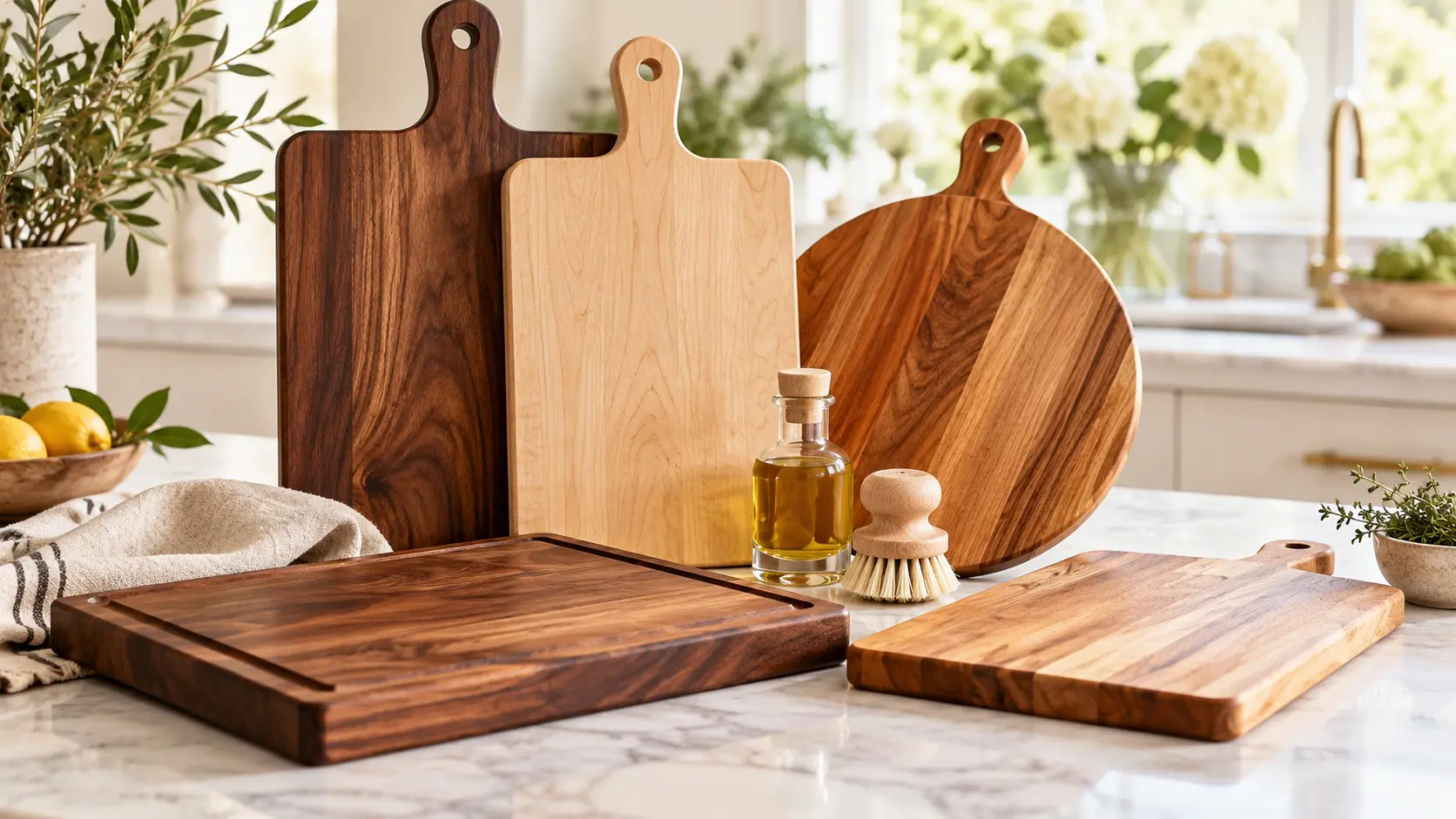
Shop My Cutting Board Favorites
Beautiful wooden cutting boards, food-safe oils, and care essentials—researched for quality, durability, and long-term value. Skip the guesswork and shop my curated Amazon collection!
As an Amazon Associate, I earn from qualifying purchases.
Frequently Asked Questions
What is the best material for a cutting board?
For most home kitchens, a closed-grain hardwood like maple, walnut, or cherry. It’s gentle on knives, holds up well to frequent use, is easy to keep clean with basic care, and doesn’t shed plastic. Hard maple is the most common choice in professional kitchens and butcher blocks.
Is bamboo or wood better for a cutting board?
Hardwood is better for knives and lasts longer. Bamboo is cheaper and lighter and still a good plastic-free option, but it’s a bit harder on knife edges. Check that it’s made with formaldehyde-free glue.
Are plastic cutting boards safe?
They’re safe to use in the everyday sense, but they shed microplastics as you cut, and deep knife grooves can harbor bacteria. If you use one, replace it once the cut marks get deep. For a board you’ll use every day, wood or bamboo is the better choice.
What cutting board material is easiest on knives?
Rubber is the gentlest, followed closely by end grain hardwood. Glass, stone, titanium, and stainless steel are the hardest on knife edges.
Can wood cutting boards go in the dishwasher?
No. The heat and long soak can warp or crack wood boards. Hand wash in hot water with a little soap, dry the board on its edge, and re-oil it when it looks dry.
How often should you replace a cutting board?
Replace a plastic cutting board when the grooves get too deep to scrub clean or it starts to warp. With daily use, that’s usually every one to two years. A well-kept hardwood board can last decades, since you can sand out knife marks and re-oil it. Replace a wood board only if it cracks all the way through or warps so it rocks on the counter.
How often should I oil a wooden cutting board?
About once a month if you use it daily, and any time it looks dry or pale. Use food grade mineral oil or a plant-based board oil, let it soak in overnight, and wipe off the extra.
- About the Author
- Latest Posts
- How I Test and Recommend

Juliet is the creator of Living Wild & Green, where she researches and writes about eco-friendly living, sustainable fashion, and non-toxic home upgrades. Since 2020, she’s been curating science-backed, stylish sustainability tips and personally testing products to help thousands of readers cut through greenwashing and live greener with confidence.