The best oil for cutting board care is a non toxic, food grade oil that stays liquid and resists going rancid: fractionated coconut oil if you want plant-based, or food grade mineral oil if you want the classic, budget-friendly choice. My top pick is Caron & Doucet, a coconut-based board oil with no petroleum. If you want the cheapest option that works, a bottle of pure food grade mineral oil does the job.
Below are my picks for the best cutting board oil for wood cutting boards and bamboo, plus what to look for, which oils to avoid (olive oil is the big one), and how oil differs from a cutting board conditioner.
A quick note on how I choose: I’m not the eco police, and the goal is better, not perfect. Any food-safe oil that keeps a wood board going for years instead of sending it to the trash is a win. I lead with plant-based options, but mineral oil earns its place too. The one thing I won’t recommend is anything toxic.
This post contains affiliate links. If you make a purchase through them, I may earn a small commission at no extra cost to you.
Best Cutting Board Oils at a Glance
Pick | Best for | Base | Plant-based |
|---|---|---|---|
Caron & Doucet Cutting Board Oil | Best overall | Refined coconut oil, essential oils | Yes |
Clark’s Coconut Cutting Board Oil | Best plant-based runner-up | Fractionated coconut oil | Yes |
Walrus Oil Cutting Board Oil | Best oil-and-wax blend | Mineral oil, coconut oil, beeswax | No |
John Boos Mystery Oil and Board Cream | Best for John Boos boards | Proprietary oil, beeswax cream | No |
Howard Cutting Board Oil | Best budget pick | Food grade mineral oil | No |
The Best Cutting Board Oils
1. Caron & Doucet Cutting Board Oil: Best Overall
Caron & Doucet makes its board oil from a refined coconut oil base with a proprietary blend of essential oils, and no mineral oil, palm, or soy. It’s vegan and processed to stay liquid and resist going rancid the way pantry oils can. The essential oils give it a light scent, so it isn’t the pick if you need something fragrance-free. It soaks into the grain like mineral oil and brings out the wood’s rich color without leaving a sticky film.
It comes in recyclable aluminum packaging, which is a nice bonus for a plastic-free kitchen. The trade-off is price: it costs more per ounce than plain mineral oil. It’s also the oil I recommend in my cutting board material guide for anyone who wants to skip petroleum.
Best for: anyone who wants a petroleum-free, plant-based oil and doesn’t mind added essential oils.
2. Clark’s Coconut Cutting Board Oil: Best Plant-Based Runner-Up
Clark’s is best known for its mineral oil, but it also makes a coconut version made from fractionated (MCT) coconut oil with no mineral oil. It’s plant-based, with no added fragrance or additives, and it’s easy to find. If you want the simplest ingredient list, choose this one over Caron & Doucet. Clark’s also sells matching wax and care kits if you want the whole routine from one brand, creating a full plant-based care set.
When you shop, check the label. Clark’s regular cutting board oil is mineral oil, so make sure you pick the coconut one if plant-based matters to you.
Best for: anyone who wants a plant-based oil with no added fragrance.
3. Walrus Oil Cutting Board Oil: Best Oil-and-Wax Blend
Walrus Oil blends fractionated coconut oil, mineral oil, beeswax, and vitamin E in one bottle. The oils soak in while the beeswax adds a light water-resistant layer, so it does the job of an oil and a conditioner at once. It’s NSF certified for food-contact surfaces and popular with woodworkers who make cutting boards and charcuterie boards. That makes it a good fit for a charcuterie board you want to keep looking rich.
It’s an effective combination product rather than the greenest pick: the mineral oil is petroleum-based, and the beeswax isn’t vegan. You shake it before using, let it sit for several hours, and buff off the excess.
Best for: a one-step oil and seal for boards you use every day.
4. John Boos Mystery Oil and Board Cream: Best for John Boos Boards
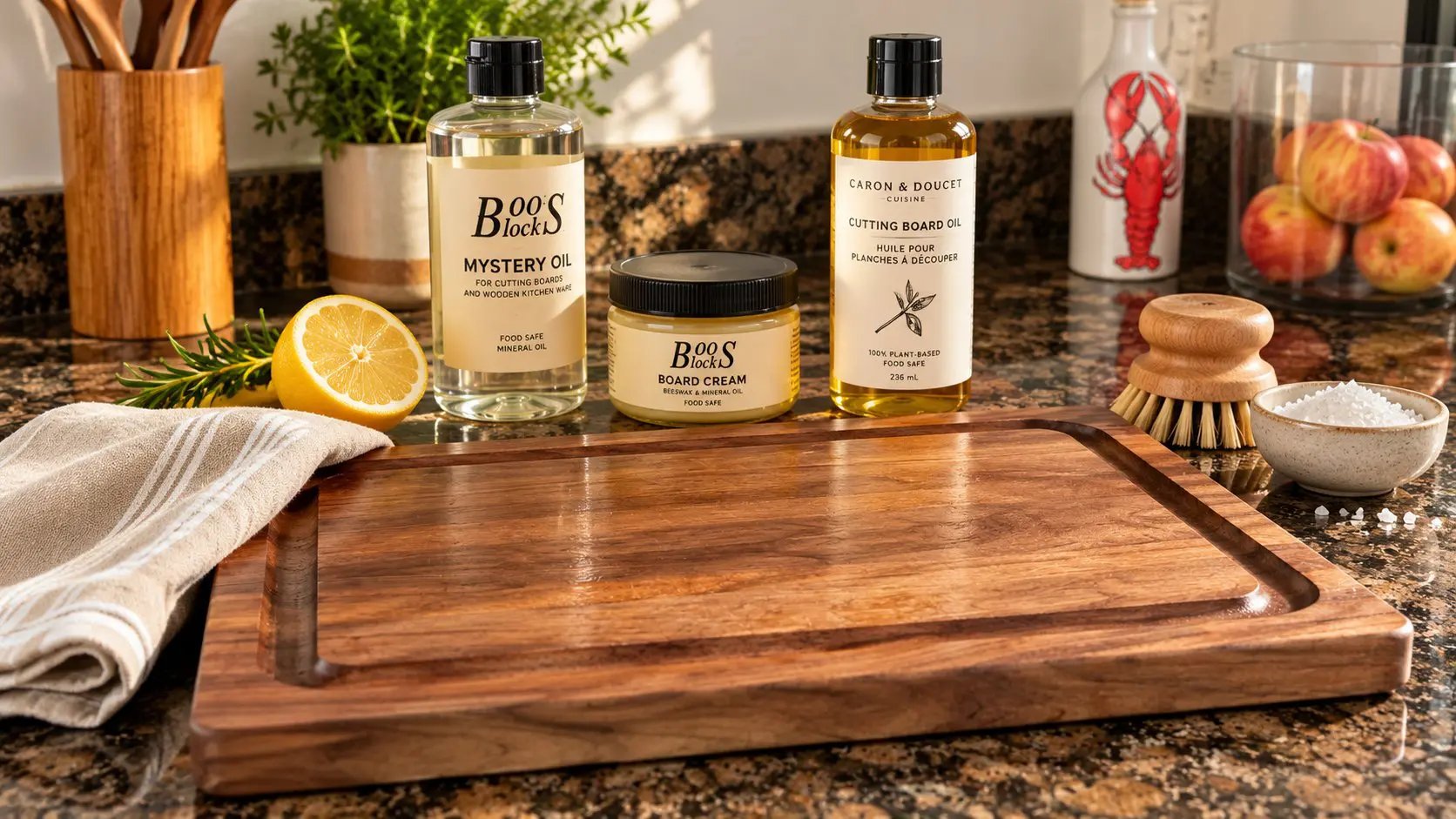
I cook on John Boos boards, and Boos makes a care set designed for them. Mystery Oil is a proprietary, food-safe conditioning oil, and it’s NSF certified. The Board Cream is unbleached beeswax and food grade mineral oil, and it seals the surface after oiling.
Boos recommends oiling at least once a month and using the cream for extra protection. Because the exact oil formula isn’t published, check with Boos if you have allergy concerns. If you own a Boos board, this set follows the maker’s own care instructions, which also protects your warranty.
Best for: John Boos owners, or anyone who wants the two-step oil and cream routine.
5. Howard Cutting Board Oil: Best Budget Pick
Howard Cutting Board Oil is pure food grade mineral oil. It’s clear, odorless, and tasteless, it never goes rancid, and it meets FDA requirements for food contact. It’s inexpensive, easy to find, and does exactly what a cutting board oil should.
If price matters most, you can also buy plain food grade mineral oil at pharmacies and hardware stores. Just check that the label says food grade or USP. Mineral oil is made from petroleum, so it’s not the pick for a plant-based kitchen. Still, it’s food safe and a solid choice.
Best for: the lowest cost per bottle, or oiling a new board that needs several coats.
What Makes the Best Oil for Cutting Board Care?
Oiling keeps a wood board from drying out, which is what leads to warping and cracking. Any oil you choose should check four boxes:
- Food grade and food safe. It’s going on a surface that touches your food, so the label should say food grade, USP, or NSF certified. Some brands call it food grade wood oil.
- Won’t turn rancid. Most cooking oils contain fats that go rancid over time. Good board oils, like mineral oil and fractionated coconut oil, stay stable.
- Stays liquid. Liquid oils spread easily and penetrate the wood grain, which makes them convenient for routine conditioning.
- No added finishes or harsh chemicals. Skip products with solvents, drying agents, or varnish. Those belong on furniture, not food-prep surfaces.
Mineral Oil vs Plant-Based Oil
Food grade mineral oil is the popular choice for a reason, and many cooks consider it the best oil for cutting boards. It’s cheap, odorless, food safe, and doesn’t spoil or go rancid over time. It’s also made from petroleum, which is why many people in a natural kitchen look for an alternative.
Fractionated coconut oil is the best plant-based swap. It’s coconut oil with the fats that turn solid and go rancid removed, so it stays liquid and stable just like mineral oil. It costs more, but it works the same way.
Honestly, both are good options. If you’re using mineral oil now, you don’t need to throw it out. Just consider the plant-based version when you run out.
Oils to Avoid on a Cutting Board
Olive Oil and Other Cooking Oils
Olive, canola, vegetable, and sunflower oil are the most common mistake. They soak in at first, but over time the fats spoil inside the wood, and the board turns sticky and leaves an unpleasant sour smell. Save cooking oils, and most other oils from the pantry, for cooking.
Regular Coconut Oil
The coconut oil in your pantry isn’t the same as fractionated coconut oil. It turns solid at room temperature and can still go rancid. Look for “fractionated” or “MCT” on the label.
Walnut Oil
Walnut oil is sometimes used to finish wooden cutting boards because some formulations cure into a protective layer instead of turning rancid. However, if anyone in your household, or a guest you cook for, has a tree nut allergy, choose a different oil unless you’ve confirmed that specific product is safe for them.
Tung Oil
Pure tung oil cures into a hard, water-resistant finish, and it’s considered food safe once fully cured. The catch is that curing can take weeks. Many products labeled “tung oil finish” also contain solvents and drying agents. It’s better suited to salad bowls and wooden utensils you’re finishing once than to a board you oil every few weeks.
Cutting Board Oil vs Cutting Board Conditioner
Cutting board oil is liquid and soaks deep into the wood. A cutting board conditioner (also called board cream, board butter, or wax) is usually beeswax and mineral oil, or wax with coconut oil. It’s thicker and stays closer to the surface, where it seals in the oil and gives the board extra water resistance. Beeswax also leaves a soft sheen that makes the wood look its best.
For most boards, oil does most of the work. Adding conditioner every other time helps protect boards you use daily, especially for meat and fruit juices. Walrus Oil combines both in one product. The Boos set gives you both in separate containers.
How to Apply Cutting Board Oil
- Start clean and dry. Hand-wash the board with hot soapy water and a brush (never soak it, and keep it out of the dishwasher). Rinse with hot water and let the washed board air-dry completely on its edge. Oil won’t soak into damp wood that still holds moisture.
- Apply oil. Pour on a generous amount and rub it over the entire surface with a clean cloth or paper towel, including the edges and underside. A paper towel folded in half makes an easy applicator.
- Let it soak. Leave it for several hours or overnight so the oil can soak into the grain. A dry board may need a second coat.
- Wipe off the excess oil. Wipe away any oil that didn’t soak in, and buff the board until it feels smooth, not greasy.
Regular oiling is the easiest way to maintain a wood cutting board and keep it in good condition. A simple test tells you when it’s time: sprinkle a few drops of water on the board. If they bead up, you’re fine. If the water soaks into the wood, it needs more oil. How often that happens depends on the wood type and how much you use the board.
One more tip: make sure the board is completely dry before you oil it or put it away. Boards stored damp can grow mildew, which shows up as small black spots. Keep in mind that oil protects the wood but doesn’t sanitize it, so still wash the board after every use and keep a separate board for raw meat. For the full routine, including removing stubborn stains with a baking soda slurry or kosher salt and lemon juice, see my guide on how to clean a wooden cutting board.
Frequently Asked Questions
What is the best oil for a wooden cutting board?
Food grade mineral oil or fractionated coconut oil. Both stay liquid, soak into the wood, and resist going rancid. Choose fractionated coconut oil if you want plant-based.
Can I use olive oil on a cutting board?
It’s best not to. Olive oil and other cooking oils go rancid in the wood and leave the board sticky and smelly.
Is mineral oil safe for cutting boards?
Yes. Food grade (USP) mineral oil is food safe and is the most common cutting board oil. It’s made from petroleum, so some people prefer a plant-based alternative.
Can I use coconut oil on a cutting board?
Use fractionated (MCT) coconut oil, which stays liquid and won’t go rancid. Regular pantry coconut oil turns solid and can go rancid over time.
How often should I oil my cutting board?
Every 3 to 4 weeks with daily use, or whenever water soaks in instead of beading up. A new board usually needs oil more often at first, so follow the manufacturer’s instructions for the first few weeks.
Can I use cutting board oil on wooden spoons and salad bowls?
Yes. The same oil works on wooden utensils, salad bowls, butcher block counters, and charcuterie boards. Just skip anything with a varnished finish.
Can oil fix a cracked board?
No. Oil helps prevent cracks caused by dryness, but it can’t repair a board that has already split. Minor scratches, gouges, and stains can usually be sanded out, then re-oiled. Replace a board with a crack or grooves too deep to clean thoroughly. My non-toxic cutting boards guide has picks if you need a replacement.
How long does a bottle of cutting board oil last?
For a home kitchen, even a small bottle lasts months, and a one quart container can last years. Store it tightly closed in a cool, dry place.
- About the Author
- Latest Posts
- How I Test and Recommend

Juliet is the creator of Living Wild & Green, where she researches and writes about eco-friendly living, sustainable fashion, and non-toxic home upgrades. Since 2020, she’s been curating science-backed, stylish sustainability tips and personally testing products to help thousands of readers cut through greenwashing and live greener with confidence.